
How Long Do Seeds Take to Germinate? Timing by Crop
Compare seed germination times by crop and soil temperature, then check moisture, sowing depth and seed quality before deciding to resow.
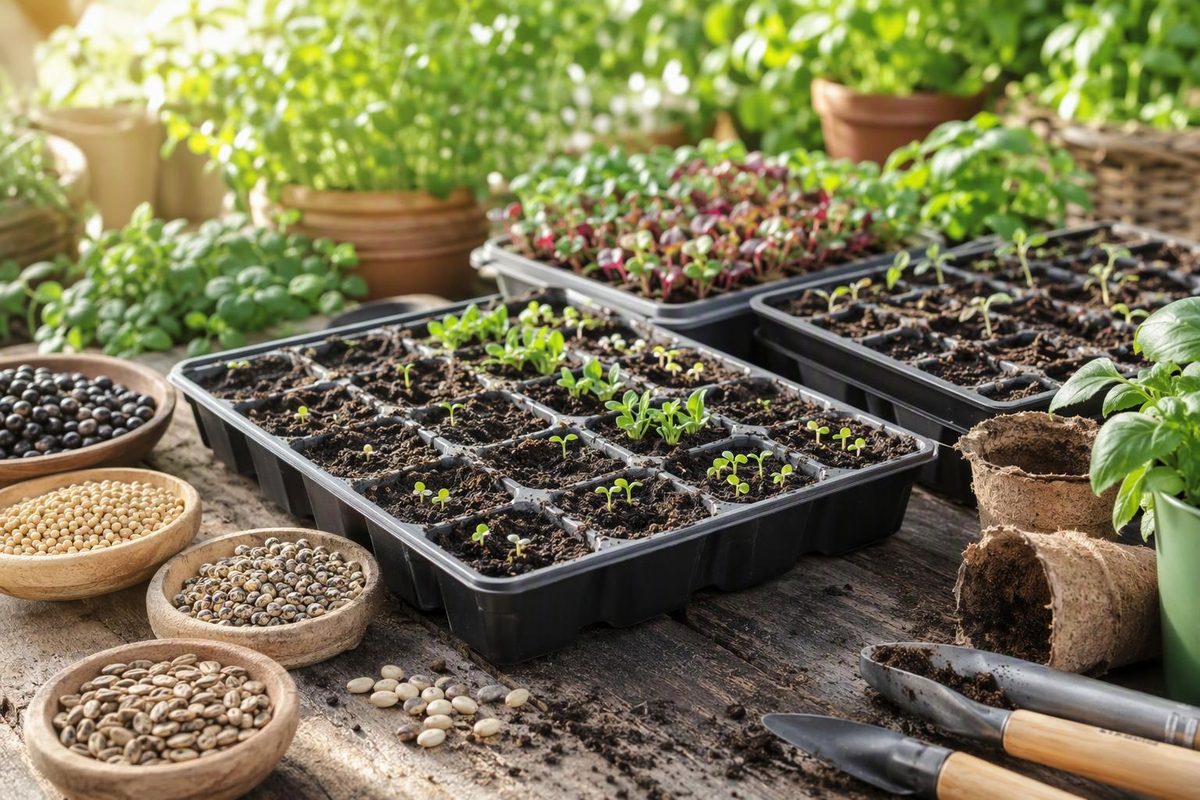
Many garden seeds germinate within about 7–10 days under suitable conditions, according to Illinois Extension, but that is a starting estimate, not a deadline. The species, temperature of the seed-starting mix, moisture and any dormancy treatment determine how long you should wait. Start with the germination window on your packet—not its days-to-harvest figure.
In a tray or garden bed, your visible checkpoint is seedling emergence above the surface. A seed may already be sprouting below ground before you see it.
Germination times depend on soil temperature
The comparison below comes from an experiment published by Oregon State University Extension. It records days until seedlings appeared, with seeds planted ½ inch deep. The page does not identify cultivars; use these results to understand temperature effects, not as a planting-depth guide or a promise for your variety.
| Crop | Days to emergence at 59°F (15°C) | Days to emergence at 77°F (25°C) |
|---|---|---|
| Lettuce | 4 | 2 |
| Radish | 6 | 3 |
| Cucumber | 13 | 4 |
| Carrot | 10 | 6 |
| Tomato | 14 | 6 |
| Bean | 16 | 8 |
| Pepper | 25 | 8 |
| Parsley | 17 | 13 |
Flowers have their own schedules too. For marigolds (Tagetes spp.), Johnny’s Selected Seeds gives 4–7 days at 75–80°F (24–27°C).
Warmer is not always better. In the OSU experiment, lettuce and spinach showed little or no germination at 95°F (35°C). If a late-summer sowing stays bare, check for excessive heat rather than automatically adding warmth; our guide to fall lettuce germination in hot soil covers that situation.
What to check while you wait
Label each sowing with the crop, variety and date. Then check these conditions before deciding the seeds have failed:
- Temperature at seed depth. Measure the mix or soil, not just room or outdoor air. Minnesota Extension notes that indoor potting mix can be as much as 5°F cooler than the air. Compare the reading with your crop’s packet instructions.
- Moisture through the seed zone. Keep the mix moist, but not waterlogged. A misted surface can conceal dry mix underneath; check below the surface in an unsown corner. Drain excess water from the tray.
- Depth and light requirements. Follow the packet. Some seeds need light to germinate, so burying every species the same way can prevent success.
These checks follow Minnesota Extension’s seed-starting guidance.
Some seeds need months, not days
Seeds of some woody plants and herbaceous perennials need a dormancy-breaking treatment before ordinary sowing conditions will work. Illinois Extension describes stratification periods typically lasting one to three months, depending on species.
Allow for that treatment when planning your sowing schedule. Check seeds periodically during stratification: some may sprout during treatment and can then be planted. For tree seeds, identify the species and follow its specific treatment and sowing requirements.
When to test or resow
If the packet’s germination window has passed, check temperature, moisture, depth and treatment requirements first. There is no useful universal “throw it out after 14 days” rule: the table shows that peppers in cool soil can take substantially longer.
For ordinary vegetable seeds of uncertain age, test a sample separately. Place 10 seeds in a damp paper towel, fold it over them, seal it in a bag or container, and label the date. Keep it at a suitable germination temperature and inspect every few days through the crop’s expected window. Seven sprouts out of ten is 70% germination in that small sample. Illinois Extension explains this method; seeds needing stratification must receive that treatment first.
If the test sprouts but the tray does not, revisit the tray conditions. If few test seeds germinate under appropriate conditions, fresh seed may be the more practical choice.
Once seedlings appear
Switch from germination conditions to seedling care. Provide suitable lighting promptly, and reassess heat rather than leaving every crop on a warm mat. Utah State University Extension recommends removing a humidity dome when roughly half the seeds beneath it have germinated and unplugging heat pads if temperatures are too warm. Continue with our indoor seed-starting guide for watering, lighting and growing seedlings toward transplant size.