
How to Germinate Magnolia Seeds With Moist Chilling
Clean fresh magnolia seeds, cold-stratify them without drying, then sow in warm mix. Check chilling time, planting depth and seedling growth.
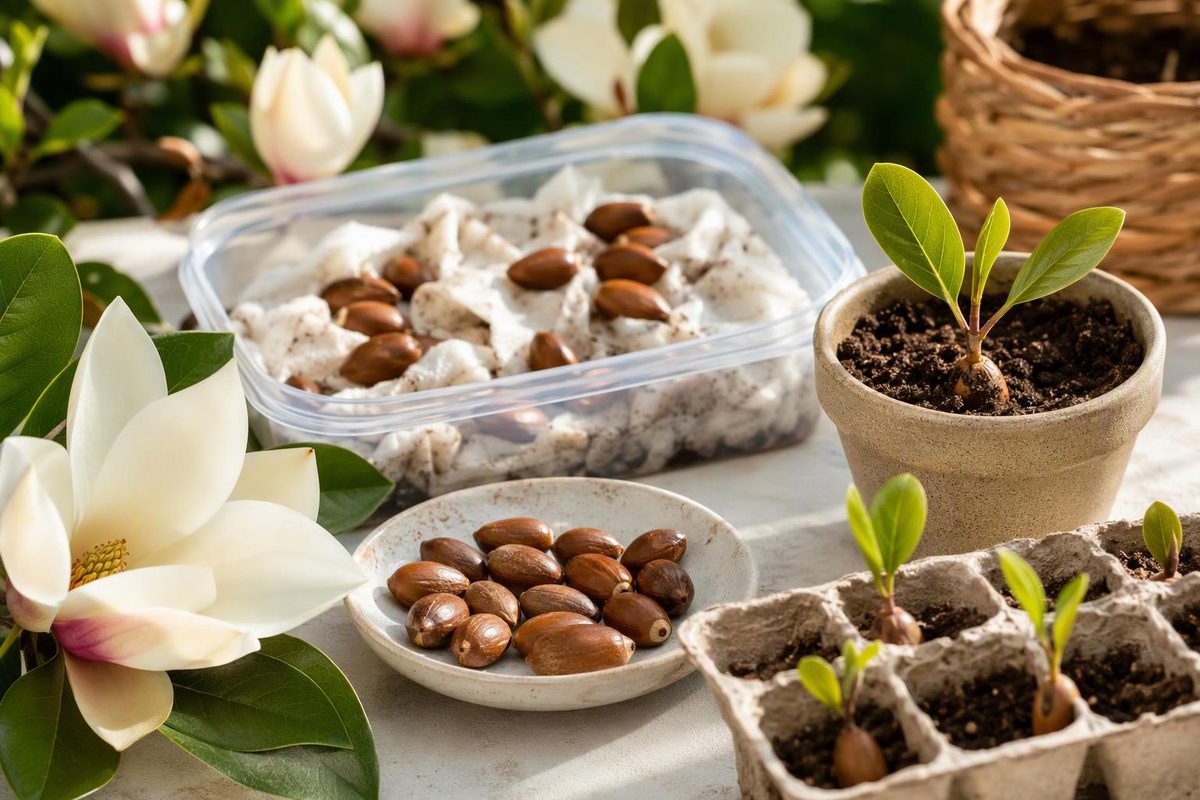
For many garden magnolias, a practical starting method is to remove the red or orange fleshy covering, keep the cleaned seeds moist in the refrigerator for two to four months, then sow them in pots indoors. The cold stage prepares the seed for germination; warmth comes afterward. This is the Royal Horticultural Society’s general magnolia seed-starting method.
Identify the magnolia before starting, if possible. Southern magnolia (Magnolia grandiflora), sweetbay (M. virginiana) and cucumber magnolia (M. acuminata) have different documented germination responses. Follow species-specific supplier instructions where available rather than assuming every magnolia needs identical treatment.
1. Collect fresh seeds and remove the fleshy covering
Collect when the cone-like fruits begin splitting and exposing their brightly colored seeds. You are planting the individual seeds, not the whole cone.
For freshly collected seed:
- Remove the seeds from the fruit.
- Soak them in room-temperature water for about three days to loosen the fleshy covering.
- Squeeze or rub off that covering, then rinse the cleaned seeds.
- Move them into moist storage promptly—do not leave them drying like ordinary flower seeds.
This preparation is based on Scott Arboretum’s magnolia seed-harvesting practice, which warns that dry-stored seeds rapidly lose viability. If purchased seeds are already cleaned, skip the fruit-removal steps and check whether the seller has already chilled them.
Remove the fleshy layer, leaving the hard inner seed coat intact. Avoid freezing, acid treatments and hot-water soaking: the USDA Forest Service’s magnolia reference reports injury from freezing and sulfuric acid treatments, and no benefit from hot-water soaking.
2. Cold-stratify without letting the seeds dry
Mix the cleaned seeds with slightly moist vermiculite or sand in a resealable bag. The medium should feel damp, with no pool of water in the bottom. Label the bag with the species, collection source and date chilling began.
Scott Arboretum uses two to four months at 32–41°F (0–5°C). Keep the bag in the refrigerator, not the freezer, and use a thermometer to choose a storage spot that stays above freezing within that range. Refrigerating seeds in a dry envelope is not equivalent: University of Maryland Extension explains that magnolia seeds need moisture throughout stratification.
Check periodically that the medium remains damp. If a seed produces a visible root, pot it promptly, handling the seed rather than the fragile root.
Outdoor alternative: In a climate with a suitably cool winter, sow fresh seeds in fall and let winter supply the moist chilling. Protect pots or beds from mice and other seed-eaters, and prevent the mix from drying out. Both Scott Arboretum and Maryland Extension describe outdoor sowing as an option. A refrigerator offers more control where winters are warm or outdoor pots are difficult to monitor.
3. Sow the chilled seeds and provide warmth
Use clean pots with drainage holes and fresh, premoistened seed-starting mix. Sow separately where practical so seedlings can be moved without untangling their roots.
For southern magnolia, Maryland Extension cites a resource giving a ¼-inch sowing depth, while explicitly noting that it cannot confirm this depth for every magnolia species. For other species, use the supplier’s depth instructions rather than burying all magnolia seeds to the same depth. Source: Maryland Extension
Keep the mix moist, not saturated, and empty standing water from the tray. Move the pots out of cold storage into warmth. For southern magnolia, the USDA reference reports fastest germination at about 84°F (29°C) in a historical study. If using a heat mat, regulate it with a thermostat and measure the mix temperature rather than relying on room temperature.
Expect weeks, not days. USDA summarizes southern magnolia germination tests lasting 30–50 days at 86°F days and 68°F nights; sweetbay and cucumber magnolia were tested under other conditions. Those are test windows, not guaranteed home emergence deadlines. Source: USDA Forest Service
4. Care for sprouts—and diagnose an empty pot
Once shoots emerge, provide strong light. Keep watering evenly without leaving roots standing in water. Move seedlings into larger pots when they outgrow their containers, supporting the rootball rather than pulling the stem. Gradually acclimate indoor-grown plants before leaving them outdoors; our indoor seed-starting guide covers lighting, watering and hardening off. These practices also follow University of Minnesota Extension’s seedling guidance.
If nothing emerges, check three things before discarding the batch:
- Storage history: Did the seeds dry out before or during chilling?
- Actual treatment: Did they receive moist chilling for the intended period, followed by warmth?
- Pot conditions: Is the mix drying below the surface, waterlogged or still cold?
Sow several seeds if available; successful treatment cannot make every seed viable. Plan to grow the seedlings on rather than rushing them into the landscape. The RHS advises that seed-grown magnolias may need two or three years before planting out and may not flower for ten years or more.