
When to Plant Pumpkin Seeds: Frost, Soil and Harvest Timing
Choose pumpkin sowing dates using local frost timing, measured soil warmth and packet maturity days, with indoor-start and Halloween planning guidance.
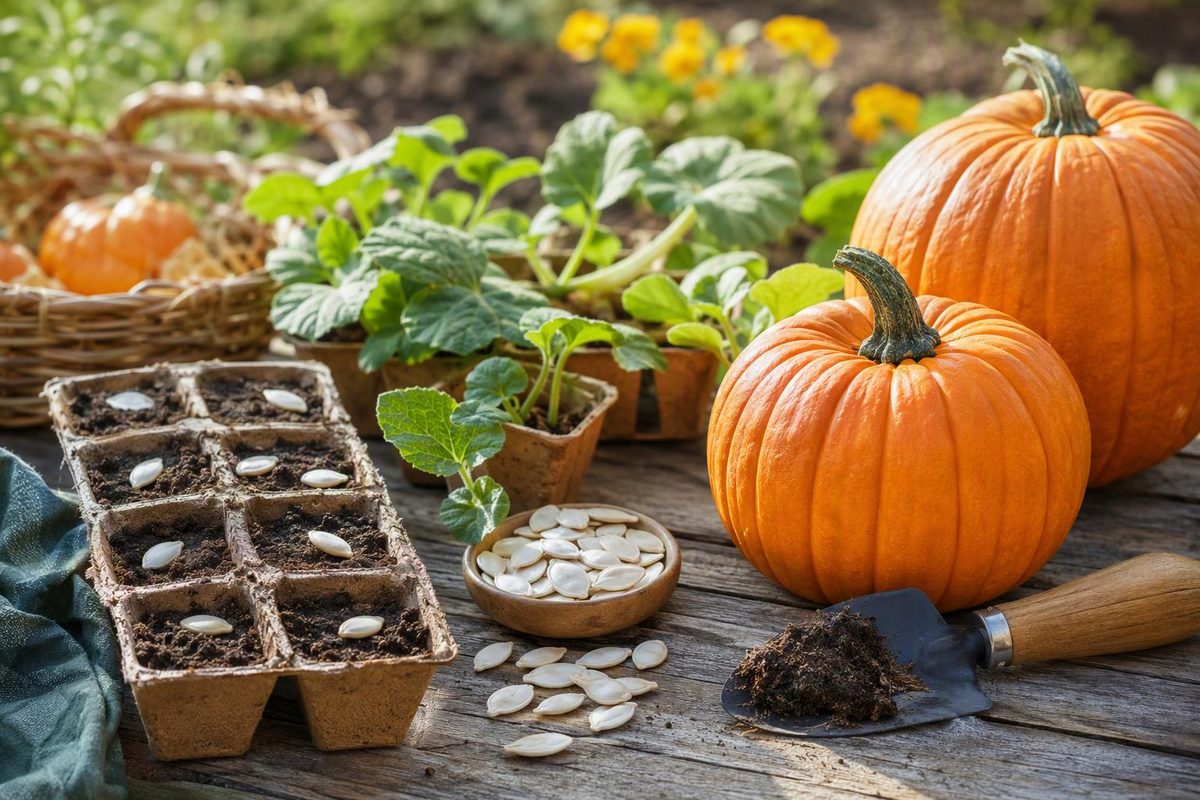
Plant pumpkin seeds outdoors after frost danger has passed and the soil has warmed. University of Minnesota Extension recommends at least 65°F (18°C), measured 2 inches deep; Johnny’s Selected Seeds recommends at least 70°F (21°C) for direct sowing. Follow your variety’s instructions if they specify the warmer threshold. UMN Extension · Johnny’s pumpkin growing instructions
For indoor starts, sow about 3–4 weeks before your expected outdoor planting date—not automatically before your last frost date. Your planting window also needs enough time at the other end for the chosen variety to ripen before autumn cold. UMN Extension · Johnny’s growing instructions
Find your outdoor sowing window
Use three checks together:
- Local frost timing: Find your area’s average last spring frost date through a local Extension planting calendar. Treat it as a planning reference, then check the forecast before sowing.
- Soil warmth: Measure the bed rather than relying on afternoon air temperature. Use the 65°F checkpoint from Minnesota Extension or the warmer target specified by your seed supplier. UMN Extension
- Enough remaining season: Compare the variety’s maturity estimate with the time left before your intended harvest and expected autumn frost.
As a cautious calendar starting point, Colorado State University Extension advises waiting a week after the average last spring frost date—and longer if the weather remains chilly. That is not a substitute for checking your own bed. CSU Extension
What that means in different climates
| Growing situation | Timing approach |
|---|---|
| Cool northern garden | Sow once frost risk and soil warmth allow; use an earlier-maturing variety or a short indoor start if the season is tight. Minnesota Extension’s typical direct-sowing window is late May to early June. |
| Long, warm summer | Work backward from the intended harvest rather than automatically planting at the earliest opportunity. |
| High-elevation garden | Check season length especially carefully. CSU notes that pumpkins need a long, warm season and are generally more productive below 5,000 feet in Colorado. |
| Mild-winter or frost-free garden | Use a local crop calendar and the packet’s maturity estimate; there may be no useful last-frost date to count from. |
The Minnesota dates and Colorado elevation guidance are regional examples, not nationwide planting rules. UMN Extension · CSU Extension
When to start pumpkin seeds indoors
First choose a realistic planting-out date, when the bed should be warm and frost danger past. Then count backward 3–4 weeks. Johnny’s recommends sowing about three weeks before transplanting; Minnesota Extension allows about four weeks and looks for two to three true leaves. Johnny’s growing instructions · UMN Extension
For example, if your garden is usually ready around June 1, plan indoor sowing for roughly May 4–11. That is a planning example, not a forecast that the soil will be ready.
Keep these stages separate:
- Germination: Johnny’s recommends a warm growing medium, 75–95°F (24–35°C), for indoor pumpkin starts.
- After emergence: Provide adequate light; warmth alone does not produce sturdy seedlings. See our indoor seed-starting guide for lighting and watering setup.
- Before transplanting: Harden plants gradually; Johnny’s recommends 4–7 days. Move the root ball intact, with minimal root disturbance. Johnny’s growing instructions
Work backward for Halloween—or a late sowing
Read the maturity estimate for the actual variety, including where its clock starts. Johnny’s counts pumpkin maturity from direct seeding and instructs growers to subtract 14 days for transplants. Do not assume another supplier uses the same convention. Johnny’s maturity guidance
Choose a harvest target that fits your local autumn weather. If frost usually arrives before Halloween, plan to harvest earlier rather than leave the crop outside until October 31. Minnesota Extension advises picking pumpkins before a hard freeze. UMN Extension
For direct sowing, use:
Planned harvest date − packet maturity days − planning buffer = latest tentative sowing date.
For example, a hypothetical 100-day variety intended for harvest by September 30 gives a June 8 sowing date if you allow an extra 14 days. That buffer is a scheduling allowance, not a tested maturity figure or a guarantee. The calculated date still needs to fall within your frost-safe, warm-soil planting window.
If your remaining season barely matches the packet estimate, choose a shorter-season variety rather than banking on ideal weather.
Once the date fits, use our pumpkin-from-seed guide for sowing depth, spacing and care through harvest.