
How to Grow a Pumpkin From a Seed
Grow pumpkins from seed with soil-temperature checks, sowing depth, spacing, indoor-start timing, and practical cues for flowers and harvest.
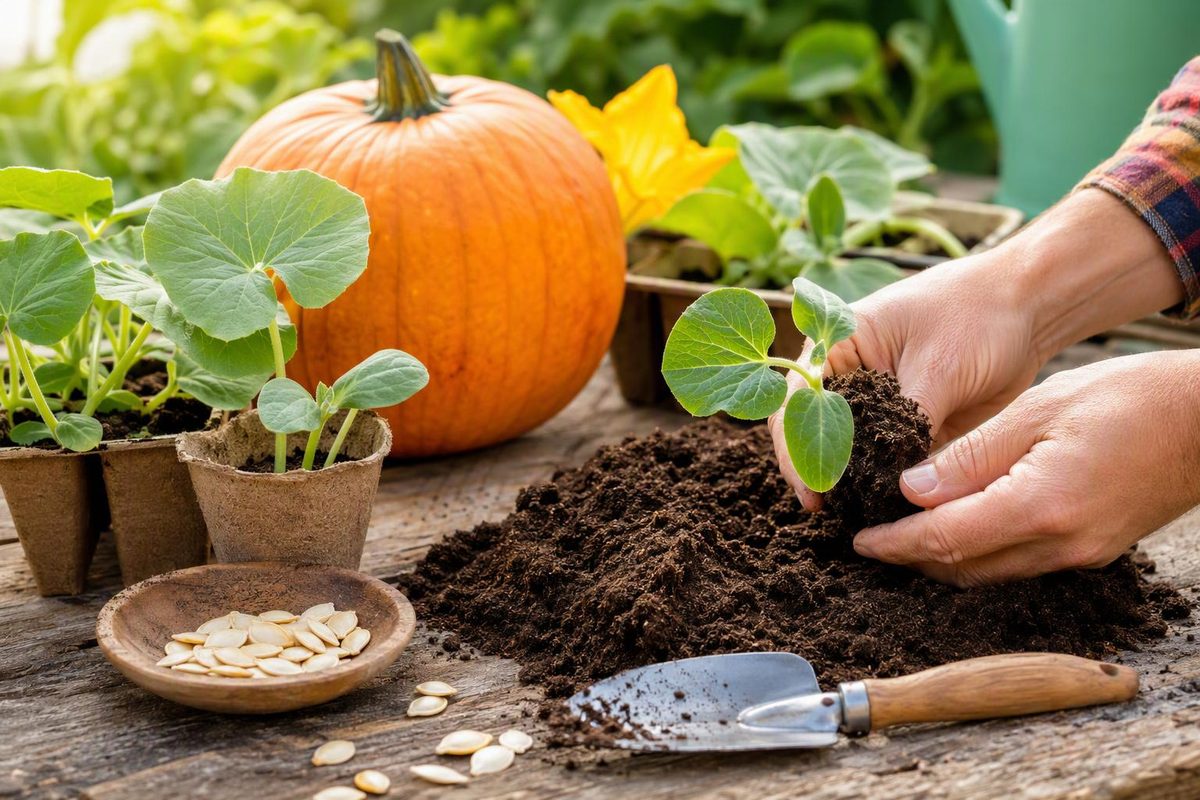
Sow pumpkin seeds about 1 inch deep after frost danger has passed and the soil has warmed to at least 65°F (18°C). Keep the seed zone moist, then thin the seedlings so the vines have room to grow. Illinois Extension recommends the 1-inch depth; Minnesota Extension specifies measuring soil warmth at 2 inches deep—not judging it by the afternoon air temperature. (Illinois Extension, Minnesota Extension)
Direct sowing is usually simplest. An indoor start can help where the frost-free season is short, but pumpkins need only a brief head start.
1. Choose seed that fits your season and space
Choose a pie pumpkin for cooking or a carving variety for jack-o’-lanterns. Many familiar pumpkins are Cucurbita pepo; giant types often belong to C. maxima. Read the variety description for its vine habit, spacing and maturity period before buying. Bush or semi-bush types need less room, but a miniature fruit does not necessarily mean a compact vine. (Minnesota Extension, Cornell’s pumpkin guide)
Compare the packet’s maturity period with the growing time between warm-soil planting and your expected first autumn frost. Check whether the seller counts maturity from sowing or transplanting; do not assume an indoor start subtracts the same number of days from every variety.
Packet seed is the more predictable choice. Saved pumpkin seed may produce different fruit if the parent crossed with another compatible squash or pumpkin. Cross-pollination affects the next generation grown from seed, not the fruit already developing on the parent plant. (Utah State University Extension) Seed saved from a hybrid also will not reliably reproduce the parent’s traits. (Minnesota’s seed-saving guide)
2. Prepare a sunny planting area
Choose full sun and fertile, well-drained soil. Add well-rotted compost if needed, and use a soil test to guide fertilizer rather than adding a large dose by guesswork. (Cornell, Minnesota Extension)
Mark out the mature plants’ space before sowing. Minnesota Extension gives a row-planting arrangement of 24–36 inches between plants and 5–6 feet between rows, using closer spacing for bush types. (Minnesota Extension) Large running vines may need considerably more room: Illinois Extension’s vining-pumpkin arrangement uses planting groups 5–6 feet apart in rows 10–15 feet apart, thinned to two or three plants per group. Follow your variety’s instructions rather than combining these two layouts. (Illinois Extension)
3. Sow outdoors and watch for emergence
Wait until frost danger has passed and the soil measures at least 65°F; around 70°F (21°C) is a better target for prompt emergence. A sunny spring day alone is not a planting signal. (Cornell)
- Make holes about 1 inch deep, unless the packet specifies otherwise.
- For a row layout, sow two seeds at each intended plant position.
- Cover with soil, firm gently and water without washing the seeds out.
- Keep the seed zone evenly moist, not waterlogged.
- Once seedlings are established and showing true leaves, keep the stronger plant at each position. Snip the unwanted seedling at soil level instead of pulling it and disturbing nearby roots.
Cornell lists 5–10 days to emergence, with less than a week possible at 70°F and adequate moisture. Treat that as a checkpoint, not a deadline in chilly soil. Its thinning guidance also recommends snipping rather than pulling. (Cornell)
If nothing appears, check temperature at seed depth and whether the soil has dried out or stayed soggy before adding more water. Incorrect temperature, uneven moisture, excessive depth and poor-quality seed can all cause failure. (Utah State’s troubleshooting guidance) For a wider checklist, see how long seeds take to germinate.
4. If necessary, start indoors briefly
Sow 3–4 weeks before your likely outdoor planting date, not months ahead. Use individual pots or cells at least 2 inches wide and deep, filled with moist seed-starting mix. Thin to one plant per pot. Cornell recommends this short indoor schedule, while Minnesota Extension identifies two to three true leaves as a transplant checkpoint. (Cornell, Minnesota Extension)
After emergence, the priority shifts from germination warmth to strong light and balanced watering. Provide supplemental light rather than relying on a dim windowsill. Let the mix dry moderately between waterings, but not enough for seedlings to wilt; allow excess water to drain. Gradually expose seedlings to outdoor shade, then more sun and wind before planting, keeping them protected from temperatures below 50°F (10°C). Transplant only into warm soil after frost danger has passed, keeping the root ball intact and planting at its existing depth. Water immediately after planting. (Utah State’s seedling-care guidance)
For equipment and setup, use our indoor seed-starting guide.
5. Care for vines, flowers and fruit
Water the soil deeply. Minnesota Extension recommends at least 1 inch of water weekly from rain or irrigation, with adjustments for soil and weather. Use drip irrigation or careful soil-level watering to keep foliage dry. Weed shallowly to avoid damaging roots. Wait until soil reaches 75°F (24°C) before adding straw mulch, which can slow soil warming. (Minnesota Extension)
The first flowers commonly are male and drop without forming pumpkins. Female flowers have a small swollen fruit beneath the bloom. Bees transfer pollen, so remove insect-excluding row covers when flowering begins. Cold, rainy weather can reduce pollination and fruit set. (Minnesota Extension, Utah State)
6. Harvest by color and rind, not the calendar alone
Look for the mature color described for your variety and a hard rind that resists a fingernail scratch. Not every ripe pumpkin is orange. Harvest before a hard freeze, cutting rather than snapping the stem and leaving 3–4 inches attached. Handle the fruit gently to avoid bruising. (Utah State, Illinois Extension)