
When to Plant Carrot Seeds: Spring and Fall Timing
Choose spring, fall or mild-winter carrot sowing dates using local frost timing, soil temperature and practical germination checkpoints.
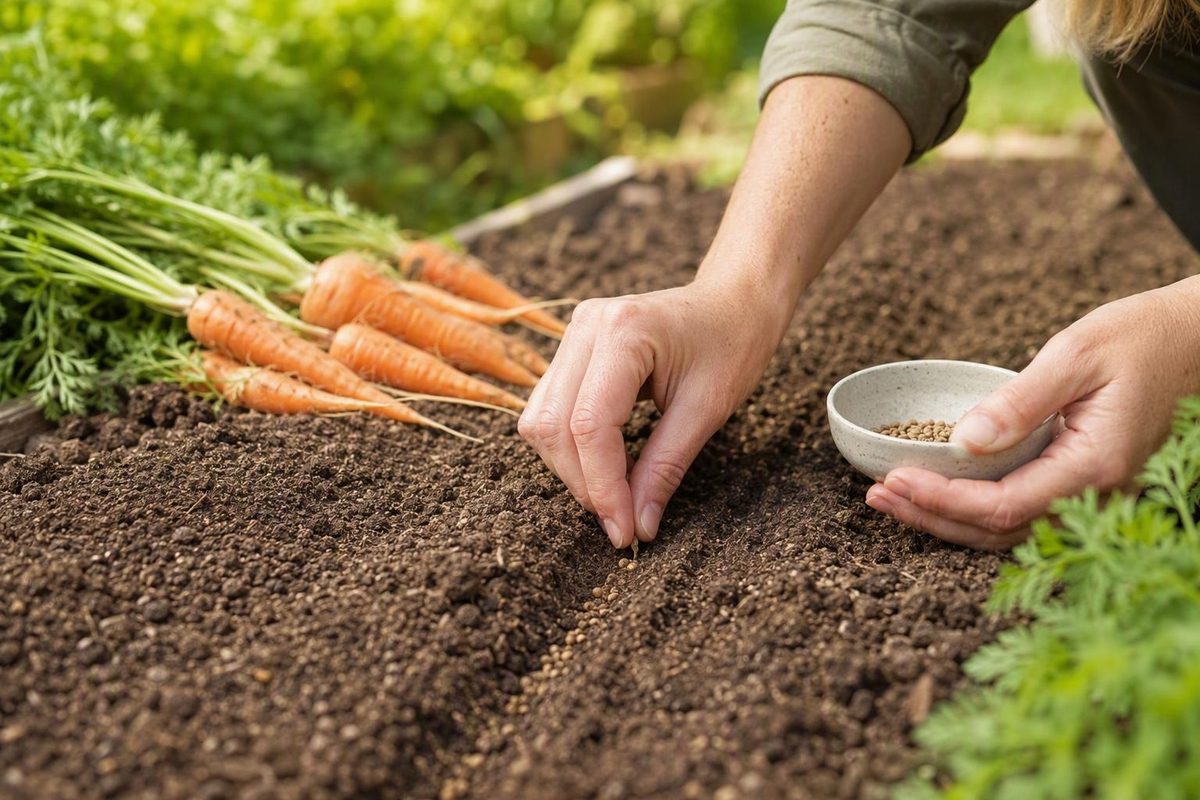
In a frost-prone climate, sow carrot seeds directly outdoors about 2–3 weeks before your average last spring frost, once the soil is workable and warming. For a fall crop, start with a window 10–12 weeks before the first fall frost. These are starting points from Utah State University Extension and University of Maryland Extension, not universal dates. In mild-winter regions, fall and winter may be your main planting season; use a regional calendar and adjust for your variety.
The useful question is not just “What month?” It is whether the seedbed can support germination now and leave enough cool growing weather for the roots to develop.
Spring: check the soil before sowing
Use your local average last-frost date to pencil in a sowing window, then check the bed itself:
- The soil is workable: you can loosen it into a fine seedbed without digging through frozen ground or smearing wet soil into clods.
- The seedbed has warmed: Maryland Extension recommends planting once soil reaches at least 45°F (7°C). Measure soil temperature rather than judging it from a warm afternoon.
- You can keep the surface moist: shallowly sown carrot seed needs an evenly moist seedbed while it germinates. Maryland Extension’s planting guidance supports both the temperature threshold and moisture requirement.
That planting threshold is not an optimum. Clemson Extension gives an optimum soil temperature range for germination of 55–75°F (13–24°C). Planting into chilly soil can mean a longer wait for emergence. Spring timing should also leave room for roots to mature before persistent summer heat, which can reduce quality. Clemson’s carrot guide distinguishes these germination and growing conditions.
Do not push sowing far earlier simply because carrots tolerate light frost. Utah State notes that planting too early and exposing plants to chilling can encourage flowering rather than the root crop you want.
Fall: count backward before the weather cools
For a fall harvest in a frost-prone climate, sowing usually happens in summer, not when autumn weather arrives. Maryland’s recommendation is to plant carrots 10–12 weeks before the first frost, with a general maturity estimate of 65–75 days from seed. For an illustrative first-frost date of October 15, that gives a sowing window of approximately July 23–August 6. See Maryland’s fall-carrot recommendation.
Check your packet before using that window. A slower-maturing variety needs more time than a quick one; the packet’s days-to-maturity figure is a planning estimate, not a promised harvest date. If your variety needs longer than the Extension guide’s estimate, move sowing earlier rather than assuming frost tolerance will make up the difference.
The first light frost is not necessarily a harvest deadline: Utah State’s guide notes that carrots can remain in the garden after light frosts. That flexibility does not remove the need to allow time for roots to size up.
Summer seedbeds create a different problem: they can be too hot and dry for establishment. Utah State reports reduced germination above 80°F (27°C). If the bed is hot, check whether your remaining season allows a later sowing, and make sure you can maintain moisture in the shallow seed zone. Utah State’s carrot fact sheet explains the heat limitation.
Mild winters: use a regional calendar
A national month-by-month or hardiness-zone chart is too coarse for this decision. Use your local Extension planting calendar, then check current soil conditions.
Florida illustrates the difference: UF/IFAS recommends carrot planting August–March in North and Central Florida, and September–March in South Florida. Those are Florida windows, not dates to transfer to a northern garden. Its guidance also recommends staggered sowings every few weeks for a steadier harvest. UF/IFAS carrot planting and care.
After choosing the date, sow for reliable emergence
Direct-sow carrots where they will grow; do not start them in indoor trays for transplanting. Their taproots develop early, and transplanting can damage or redirect them. Prepare loose, well-drained soil without stones or large clods, sow about ¼ inch deep, and water gently. These practices are supported by Minnesota Extension and Utah State Extension.
Keep the surface evenly moist rather than relying on one deep watering at planting. Expect emergence to take up to three weeks. The first leaves look like thin blades of grass; later leaves become frilly. Once seedlings are about 2 inches tall, thin crowded plants by snipping extras, leaving spacing suited to the variety—often about 2–3 inches. Minnesota’s emergence checkpoints, Maryland’s thinning guidance and Utah State’s spacing recommendation help you judge progress.
If the row remains empty, check moisture, soil crusting and temperature before sowing over it. For help deciding whether seeds are merely slow or worth replacing, see how long seeds take to germinate.