
Seed-Starting Mix for Tomatoes: What to Use
Choose a light tomato seed-starting mix, prepare it for even moisture, and know when seedlings need potting mix and fertilizer.
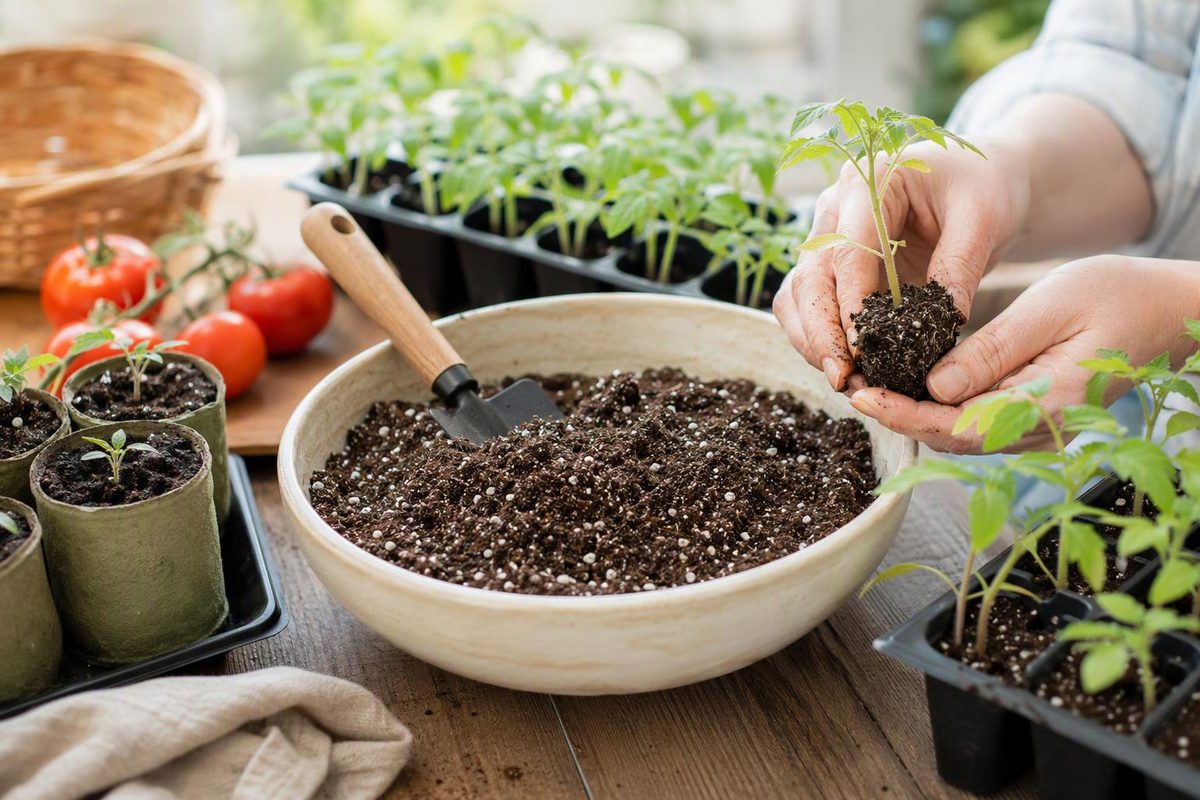
Use a fresh, fine-textured soilless mix that holds moisture but still drains freely for tomato seeds. A bagged seed-starting mix is the simplest option. A light, fluffy all-purpose transplant mix also works if it does not contain large bark pieces.
Look for peat moss or coir as a moisture-holding ingredient, usually with vermiculite or perlite to preserve air space. Avoid garden soil, straight compost and growing mix left from a previous crop.
Check the mix before sowing
Moisten a handful and squeeze it. The mix should hold together loosely, then crumble when touched; water should not stream from it. In a filled cell, it should absorb water evenly and drain without leaving a glossy, flooded surface.
Commercial seed-starting mixes are lightweight and designed with the texture and porosity needed by germinating seeds and small roots. The University of Minnesota Extension recommends mixes made primarily from peat and vermiculite because they are sterile, lightweight and free of weed seeds.
Tomato seeds do not require an exceptionally fine specialty product. The University of Maryland Extension says a standard all-purpose transplant mix can start common vegetable seeds as long as it is light and fluffy. Screen out large bark fragments or save a coarse mix for potting up older seedlings.
Mixes to avoid
Garden soil: In a shallow cell, soil is dense enough to restrict air and water movement. It can also carry weed seeds and plant pathogens.
Straight compost: Compost varies in texture and fertility and is heavier than soilless media. Use it as one ingredient in an appropriate potting blend, not by itself for tomato germination.
Reused growing mix: Roots, salts and disease organisms may remain from the previous crop. Damping-off pathogens survive in soil, used media and plant debris. Minnesota Extension recommends clean containers and new potting mix rather than garden soil, compost or reused media for young seedlings (damping-off prevention guidance).
Heavily fertilized mix: Seeds use stored reserves to germinate. Excess fertilizer can create high salt levels, especially as small cells dry, and young roots are easily damaged. Check the label: some transplant mixes contain starter or slow-release fertilizer even when the bag does not look “rich.”
A simple DIY tomato seed-starting mix
For a small batch, combine:
- 4 quarts shredded sphagnum peat moss
- 4 quarts fine-grade vermiculite
- 2 tablespoons ground limestone
This is the basic recipe published by the University of New Hampshire Extension, with its optional superphosphate omitted. It is a low-fertility germination mix. The limestone offsets the acidity of raw sphagnum peat; do not add it again to a commercially limed peat product or assume that coir requires the same amendment.
If you want to use coir, choose a tested coir recipe or a prepared product rather than substituting it cup-for-cup and guessing about lime. For other ingredient combinations and ways to improve a coarse bagged product, see Mix for Seed Starting: Buy It or Make Your Own?.
Prepare the mix and sow the tomatoes
- Pre-moisten the mix. Add water gradually in a bucket and stir. Dry peat can initially resist water; pre-moistening is more even than flooding filled cells.
- Fill clean containers loosely. Use cells or pots with drainage holes. Tap the tray to settle the mix, but do not compress it hard.
- Sow 1/4 inch deep. Johnny’s Selected Seeds specifies that depth and a mix temperature of 75–85°F for tomato germination (tomato growing information). Follow the packet if it gives different directions for your variety or seed lot.
- Keep the mix moderately moist, not soggy. A clear dome can slow water loss during germination. Remove it as seedlings emerge, and empty standing water from the tray.
- Provide strong light after emergence. Germination warmth and seedling-growing conditions are not the same. Johnny’s recommends growing emerged tomato seedlings at 60–70°F; supplemental light and cooler nights help limit stretching.
Use both color and weight to judge moisture. Recently watered mix is darker and the tray feels heavier. Water as the surface starts to lighten, before the whole root zone dries.
Switch mixes as tomato seedlings grow
Seed-starting mix is for germination and early rooting. Once the first true leaves appear after the two smooth seed leaves, crowded tomatoes need more space and eventually need nutrients.
Move them into individual containers filled with fresh potting or transplant mix. Oklahoma State University recommends starting tomatoes in pasteurized seedling mix, then transplanting them into pasteurized commercial potting mix after the first true leaves develop (home-garden tomato guidance).
Read the potting-mix label before feeding. If it contains fertilizer, do not automatically add more. If it does not, wait until the seedlings have several sets of true leaves, then apply a general-purpose soluble fertilizer at one-quarter label strength once a week and use plain water between feedings. That schedule follows Minnesota Extension’s indoor seed-starting guidance.
Pale growth does not always mean a seedling needs fertilizer. Persistently wet mix can deprive roots of oxygen, while long, thin stems usually indicate inadequate light. Correct moisture and light before increasing fertilizer.
Count back about five to six weeks from the planned outdoor transplant date when deciding when to sow. The University of Maryland Extension gives that indoor growing period for tomatoes and warns that sowing too early can produce tall, root-bound plants. Aim for a compact transplant with a well-filled root ball, not the largest tomato you can grow indoors.