
Seed-Starting Mix for Peppers: What to Use
Choose a seed-starting mix for peppers, get moisture and germination heat right, and know when seedlings need fertilizer or a larger pot.
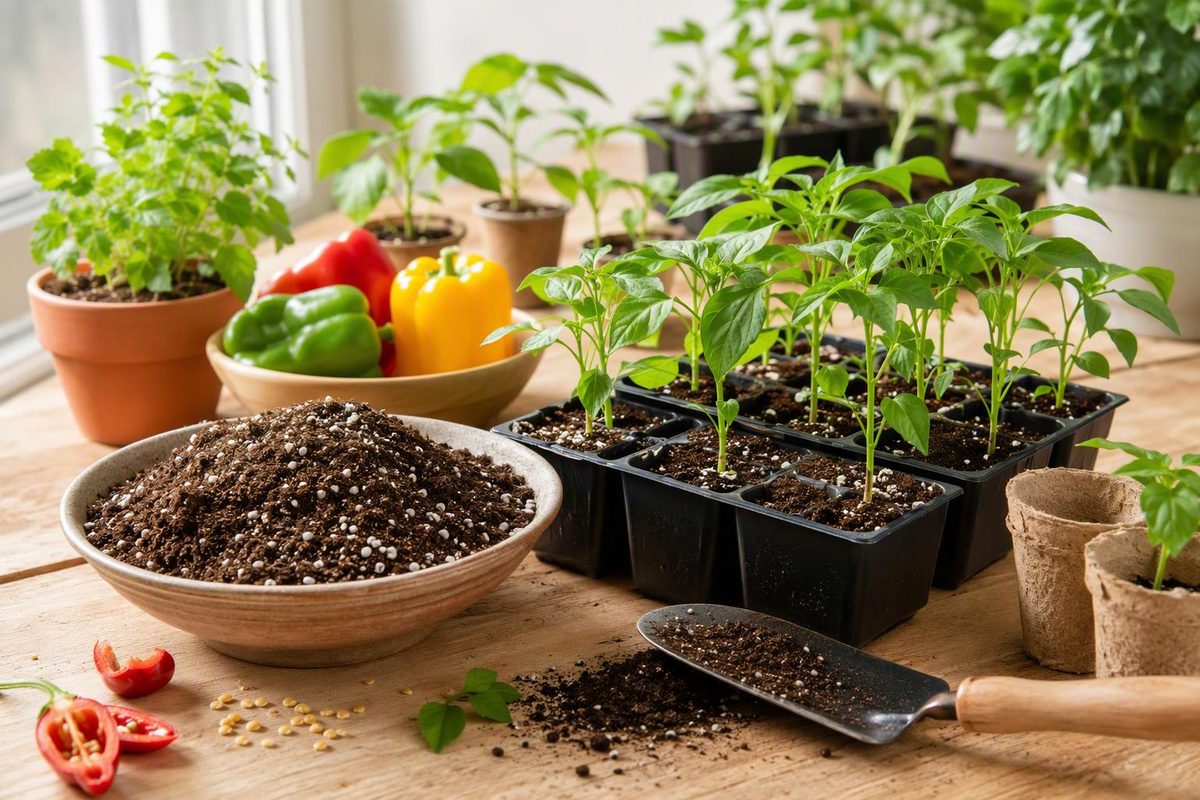
For indoor pepper seeds, choose a fresh, fine-textured, soilless seed-starting mix. You do not need a pepper-specific blend. University of Minnesota Extension recommends sowing peppers in sterile, soilless germination mix; its general seed-starting guidance favors commercial mixes because their lightweight texture and porosity suit germinating seeds and small seedlings. (Pepper growing guide, seed-starting guide)
The mix should hold moisture around the seed while allowing excess water to drain. Warmth matters too: changing brands will not correct a cold seed tray.
What to look for on the bag
Choose a product labeled for seed starting or germination, rather than garden or raised-bed use. Typical ingredients include peat moss or coconut coir, with perlite and/or vermiculite. Look for a light, fine texture rather than a mixture dominated by large woody pieces. Illinois Extension identifies these ingredients as common components of seed-starting media. (Illinois Extension)
Skip soil dug from the garden: it can contain weed seeds and disease organisms, and it tends to be too dense and poorly drained for seed trays. Do not add garden soil to a bagged seed-starting mix to make it “richer.” (Illinois Extension)
Check whether the bag contains starter fertilizer. That affects later feeding, not whether the seed needs nutrients to sprout. For homemade blends and broader buying choices, see buying or making seed-starting mix.
Prepare the mix before sowing
- Moisten it in a separate container. Add water gradually and stir until a squeezed handful holds its shape without dripping. Dry pockets should be gone.
- Fill clean pots or cells with drainage holes. Settle the mix gently so there are no large air pockets; do not pack it into a dense block.
- Sow pepper seeds about ¼ inch deep, then cover with mix and water gently without washing seeds out of place.
The moisture test and preparation method come from Illinois Extension; the pepper sowing depth comes from University of Minnesota Extension.
Keep germination warm—not waterlogged
Minnesota Extension recommends 80–90°F at the flat until pepper seedlings emerge, using a seed-starting heat mat. Measure the temperature in the mix rather than assuming the room temperature tells you what the seed experiences. Heat mats also dry the mix faster, so check moisture regularly. (Pepper growing guide)
Keep the mix evenly moist during germination. If bottom watering, let water move up through the drainage holes, then empty the remaining water from the tray. A damp surface alone is not enough: repeated light misting can leave the lower mix dry. (Minnesota Extension)
If using a humidity dome, remove it as seedlings begin emerging. Give sprouts overhead light, and reassess the heat mat rather than maintaining germination heat throughout seedling growth. Utah State Extension advises unplugging heat pads when post-emergence temperatures are too warm. (Illinois Extension, Utah State Extension)
When seedlings need feeding or more space
Seeds use stored nutrients to germinate. For an unfertilized soilless mix, Minnesota Extension recommends waiting until seedlings have several sets of true leaves—the leaves that follow the initial seed leaves—then feeding weekly with a general-purpose water-soluble fertilizer at quarter strength. Follow any seedling-specific mixing instructions on your fertilizer label; if your mix already contains fertilizer, check its label before adding more. (Minnesota Extension, Utah State Extension)
Pot up when neighboring leaves overlap or roots form a dense mat at the bottom of the cell. Use fresh, premoistened container mix and keep the pepper at its previous planting depth. Between waterings, watch the pot’s weight: it should become lighter, but do not wait for wilting. Those checkpoints are more useful than a fixed watering or repotting calendar. (Utah State Extension)