
How to Grow Wildflowers From Seed
Choose wildflower seeds for your site, plan species-dependent sowing dates, prepare a weed-free bed, and care for seedlings through establishment.
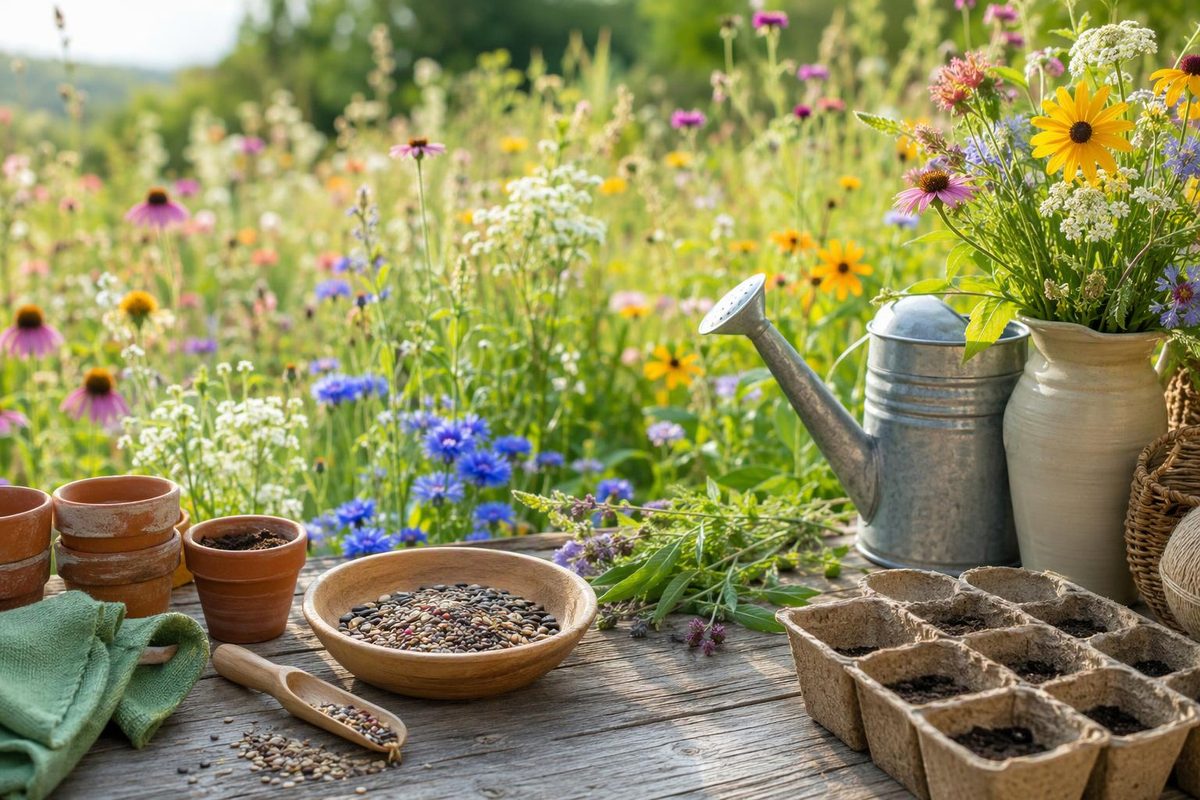
Start with seeds suited to your site, sow them onto prepared soil at the right season, and protect the seedlings from drying out and weed competition. Scattering a packet over an existing lawn is unlikely to establish a good planting: vigorous turf grasses compete with young wildflowers, and seeds need direct soil contact to germinate reliably. The Lady Bird Johnson Wildflower Center explains both requirements.
1. Choose the seeds before choosing a sowing date
First decide whether you want a seasonal flower patch or a lasting native planting.
- For first-season color: choose an annual-rich mix appropriate to your climate. Annuals can flower in their first growing season, but future displays depend on reseeding or fresh sowing.
- For a lasting planting: choose locally appropriate native perennials, with compatible native grasses if you want a meadow. Many perennials spend their first season developing roots and do not flower until their second or third year. Wildflower Center guidance describes this difference.
Read the species list rather than relying on the word “wildflower.” Check that the plants suit your region, sunlight and soil moisture. A sunny, dry-site mix is not a solution for a damp, shaded corner. Native grasses can be useful meadow companions; they are not interchangeable with existing lawn grass. UNH Extension’s meadow guide explains how site conditions and species selection work together. Also check species against your state’s noxious weed list, as the Wildflower Center recommends.
Measure the bed before buying. Use the mix’s stated coverage or sowing rate—not a universal ounces-per-square-foot rule. For example, a 10-by-12-foot bed needs enough seed for 120 square feet at that product’s recommended rate.
2. Match the sowing season to the seed requirements
There is no single planting month or germination temperature for all wildflowers. Check the packet or supplier’s directions for each species, or the directions written specifically for your mix.
Warm-season annual-rich mixes: spring sowing after local frost danger has passed is a practical option when recommended by the supplier. Allow for watering during establishment; hot, dry summer sowing is harder to keep moist. Eden Brothers gives this guidance for its annual/perennial mixes, not for every wildflower species.
Native seeds requiring cold-moist stratification: in a cold-winter climate, late-fall sowing can let winter supply that treatment naturally. For spring sowing, complete the specified refrigerated, moist treatment first. Dry storage in a refrigerator is not the same as cold-moist stratification. Prairie Moon’s instructions use damp—not dripping—medium at 33–40°F, for the duration assigned to the seed; its code C(60), for example, means 60 days. Check the bag periodically; if seeds begin sprouting, plant them promptly. Some species instead need scarification, cool soil, or more than one seasonal cycle. Follow the supplier’s germination code, rather than treating the whole mix identically without instructions.
Mild-winter climates: use regional guidance rather than a northern dormant-sowing calendar. For example, the Florida Wildflower Foundation recommends autumn-to-winter sowing windows, varying between North, Central and South Florida.
3. Prepare a clean, firm seedbed
Remove or kill existing turf and persistent weeds before sowing. For a lawn-to-meadow conversion, this may take a growing season—not an afternoon with a rake.
One no-till option is to mow short, cover the area with a securely weighted opaque tarp through the growing season, and check that the vegetation has died before removing the covering. Rake away loose debris to expose soil. UNH Extension recommends summer smothering for northeastern meadow preparation and warns that tilling the cleaned bed can bring more weed seeds into play. See its site-preparation methods.
Do not automatically add rich compost or fertilizer. Many meadow species suit relatively low-fertility soil; use a soil test and the needs of your chosen plants to decide whether amendments are warranted. UNH’s guide distinguishes low-fertility meadow sites from soils needing correction.
Ready-to-sow checkpoint: you can see exposed soil, rather than a mat of living grass, leaves or thick mulch. If the surface is loose and sandy, firm it so tiny seeds do not sink too deeply, as advised by the Florida Wildflower Foundation.
4. Broadcast evenly, then press the seed down
For a small bed:
- Measure out the recommended quantity of seed.
- Mix it with slightly damp sand or vermiculite to make the tiny seeds easier to distribute.
- Spread half while walking in one direction, then the other half at right angles to the first pass.
- Press the seed into the surface with your feet or a roller.
Good contact matters more than deep burial. Follow the packet’s covering depth: many tiny wildflower seeds need light and should remain at or very near the surface. Do not bury a mixed packet under a blanket of soil. UNH’s hand-broadcasting instructions describe the two-pass method and shallow seed placement; the Florida guide explains light requirements and pressing seeds into contact with soil.
5. Care for emerging seedlings—not just flowers
During active germination, keep the seed zone moist but not waterlogged, using gentle watering that does not wash seeds away. Check the surface rather than following a fixed weekly schedule: sandy soil dries faster than loam. This is not a direction to irrigate a dormant fall sowing continuously through winter. As plants establish, adjust watering to rainfall, soil moisture and the species’ needs. Established drought tolerance does not remove a seedling’s need for moisture. Florida Wildflower Foundation’s watering guidance distinguishes watering at sowing, during germination and after emergence.
Identify seedlings before weeding; photographs of young plants are more useful here than pictures of mature flowers. Remove known weeds before they seed. In a perennial meadow, tall annual weeds can be clipped above the wildflower seedlings to preserve light. Do not apply that mowing approach indiscriminately to an annual flower patch, where you could cut off the developing display. The Wildflower Center recommends adjusting management to the planted species.
Judge the first season by healthy seedlings and continued growth, not flower coverage alone. A mixed sowing will not necessarily emerge all at once; some native seeds may germinate in a later year. Prairie Moon notes that delayed germination can occur. Before resowing a bare-looking area, check the expected germination requirements, sowing depth, moisture and weed pressure. For timing comparisons, see how long seeds take to germinate.
If you want annuals and biennials to reseed, leave their seedheads until seed matures and drops. For a perennial planting, plan on ongoing weed checks and occasional management rather than treating it as a one-time sow-and-forget project. Wildflower Center guidance covers reseeding and longer-term meadow care.