
How to Germinate Papaya Seeds
Clean papaya seeds from ripe fruit, sow in draining mix, and keep them warm. Learn when to expect sprouts and what to check if emergence is slow.
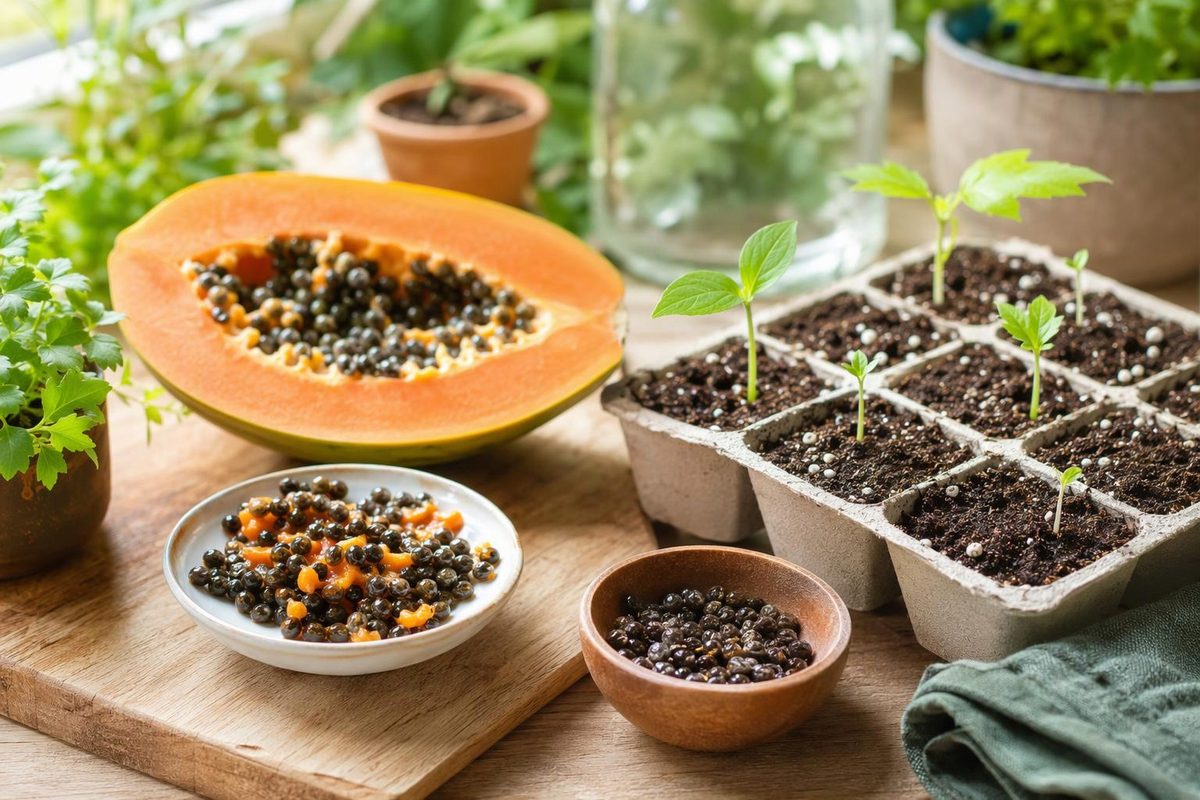
To germinate papaya (Carica papaya) seeds, remove the jelly-like coating from seeds taken from a ripe fruit, rinse them, and sow in clean, well-drained mix. Keep the pots warm and the mix moist without leaving it waterlogged. Expect emergence in roughly two to three weeks, the window given by University of Florida IFAS Extension.
1. Clean seeds from a ripe papaya
Scoop out the seeds and put them in a colander. Gently press and rub them against the mesh to break the slippery sac surrounding each seed, then rinse thoroughly. This coating, called the sarcotesta, inhibits germination; washing off fruit pulp alone is not the same as removing it.
Spread the cleaned seeds on a paper towel to dry out of direct sunlight, following UF/IFAS’s seed-preparation method. If you have purchased cleaned seed, follow its packet directions rather than repeating the fruit-cleaning step.
2. Sow in draining pots
Use clean pots with drainage holes and fresh, sterile, well-drained seed-starting mix. Moisten the mix before filling the pots so you can sow into an evenly damp medium.
For a home-garden start, UF/IFAS recommends two to four seeds per 1-gallon container, later keeping one vigorous seedling. You will not need to separate seedlings for repotting.
Unless your packet specifies otherwise, cover the seeds with about ½ inch of mix. This adapts the shallow end of the University of Hawai‘i’s ½–1-inch covering depth for direct sowing in porous Hawaiian field soil—not a tested indoor-pot depth. Its nursery guidance also specifies sterile, well-drained media to minimize root rot. University of Hawai‘i Cooperative Extension
Water gently after sowing and let excess water drain away. Label the pot with the sowing date and seed source.
3. Keep warm and check moisture
Place the containers in a warm, sunny location, as UF/IFAS recommends. Indoors, choose a warm growing space rather than a chilly windowsill. If you use supplemental heat, measure the temperature in the mix rather than assuming room temperature tells you what the seeds experience; our seed-starting heat mat guide explains probe placement and control.
Check the mix daily. It should stay damp, not sit in standing water. Empty drainage trays after watering, and avoid repeatedly soaking a pot that is still moist. Good drainage helps minimize papaya root rot. University of Hawai‘i Cooperative Extension
4. Watch for emergence, then thin
Look for shoots breaking through the mix. The two-to-three-week emergence window is a checkpoint, not a guarantee for every seed lot or indoor setup.
Once seedlings emerge, keep the strongest plant in each pot and snip the others at soil level rather than pulling them out. Continue providing light and warmth. UF/IFAS recommends planting out when seedlings reach 6–12 inches tall. In a frost-prone climate, size alone is not enough: papaya is damaged or killed by freezing temperatures, so keep plants protected until outdoor conditions are suitable. UF/IFAS
If nothing sprouts
At the three-week checkpoint, check conditions before discarding the batch:
- Cold mix: Move the pot to a warmer location and measure conditions at seed depth.
- Dry mix: Re-moisten gently and maintain more even moisture.
- Persistently wet mix: Check drainage; adding more water will not solve slow emergence.
- Coating left on fruit seeds: Prepare a second batch with the sarcotesta thoroughly removed.
If your aim is fruit rather than simply raising a plant, keep more than one separately potted seedling. Depending on the seed source, papayas can be male, female, or bisexual; germination does not tell you which you have. UF/IFAS recommends raising two or three plants to improve the chance of fruit production. UF/IFAS