
How to Germinate Basil Seeds: Depth, Warmth and Moisture
Sow basil seeds shallowly in warm, moist mix. Learn when to expect sprouts, recognize seedlings and troubleshoot slow or failed germination.
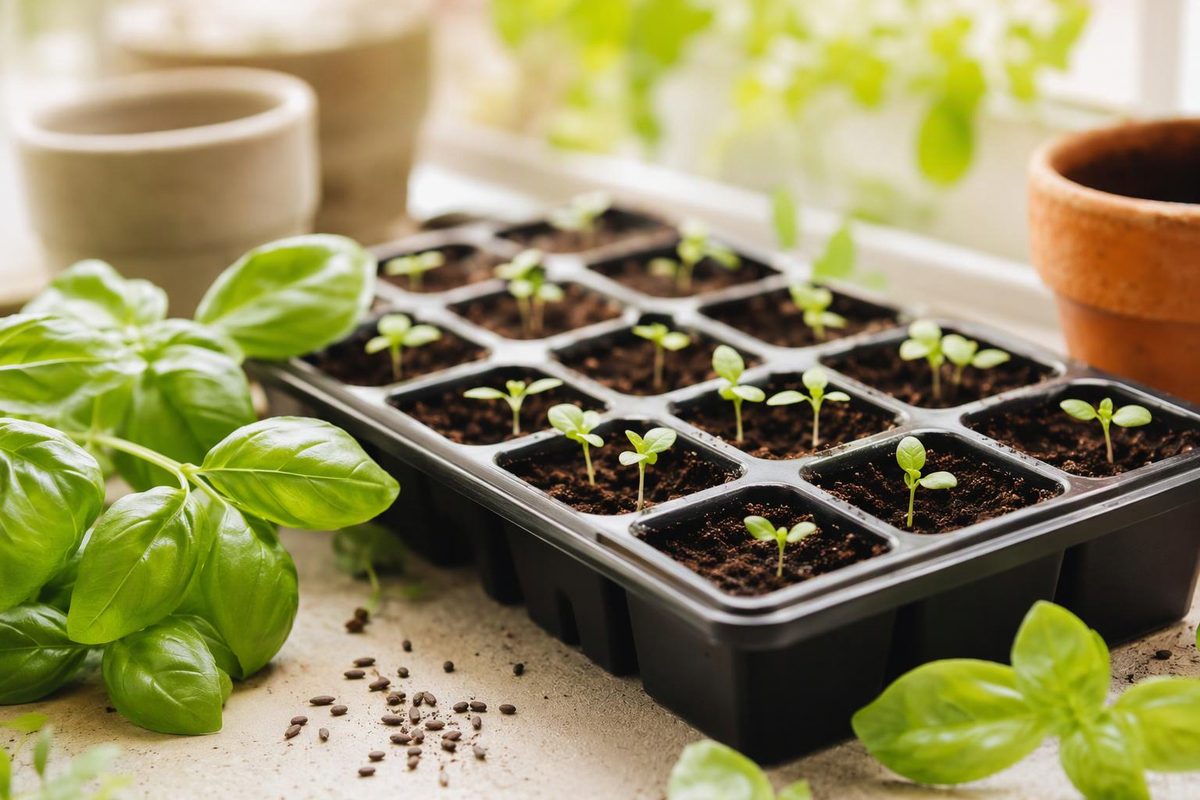
For common sweet basil (Ocimum basilicum), sow seeds in damp seed-starting mix, cover shallowly and keep the mix consistently warm and moist—not waterlogged. You can sow directly into the mix; a paper-towel stage is unnecessary. Johnny’s Selected Seeds recommends ¼-inch depth and about 70°F (21°C) for indoor germination.
Sow basil seeds step by step
- Prepare a clean container. Use small pots or a cell tray with drainage holes and fresh commercial seed-starting mix, rather than garden soil. Disinfect reused containers according to the disinfectant’s label, then rinse. Moisten the mix before sowing and let excess water drain.
- Sow shallowly. Place a seed in each cell, cover with ¼ inch of mix and firm gently. If using older seed, sow two per cell as insurance. Follow your packet if it specifies a different depth: Utah State University Extension recommends a lighter, ⅛-inch covering.
- Keep the seed zone warm. Aim for about 70°F using Johnny’s indoor directions. Check the mix temperature, not just the room thermostat: potting mix can be cooler than the surrounding air. A seed-starting heat mat can help in a cool room; it is not necessary if the mix already stays warm.
- Maintain moisture throughout the container. Water gently so the seeds do not wash out. You can also add water to the tray and let it soak upward, then drain the surplus. Misting the surface alone may leave the mix underneath dry. These container, heat and watering practices follow University of Minnesota Extension’s seed-starting guidance.
Check the basil type before covering it. Holy basil is an exception to the usual sowing depth: Johnny’s says it needs some light for germination and should be sown more shallowly than other basils. Use its packet directions rather than burying it like sweet basil.
When should basil sprout?
Check daily, but allow roughly one to two weeks rather than expecting every seed to emerge together. Johnny’s lists 5–10 days at 65–70°F (18–21°C). Utah State lists 10–14 days, with a warmer recommended soil range of 75–85°F (24–29°C). These are separate published guidelines, not a controlled comparison showing that warmer seeds take longer. Use your packet’s conditions and timing when supplied.
Look for two broad seed leaves shaped like capital Ds, with their flat sides facing each other. Those are the cotyledons; the true leaves develop afterward. Minnesota Extension also notes that ‘Purple Ruffles’ can germinate more slowly than other varieties.
Once seedlings emerge
Shift your attention from getting seeds warm enough to providing strong light and avoiding soggy roots. General indoor seedling guidance calls for 12–16 hours of light daily. If multiple seedlings emerge in a cell, wait until true leaves develop, then snip off the weaker one at mix level rather than pulling it and disturbing the remaining roots. Minnesota Extension explains these early-care steps; our indoor seed-starting guide covers the wider setup.
For garden transplants, Johnny’s recommends sowing about six weeks before setting plants out. Count back from your local warm-weather, frost-free planting window, not a fixed calendar month. For direct sowing, wait until frost danger has passed and the soil is warm.
If nothing comes up—or sprouts collapse
After about two weeks, check the mix temperature, moisture below the surface and sowing depth before resowing. Older seed may have lower viability, while a slower variety may simply need longer.
Seedlings that emerge and then topple with thin, water-soaked stems may have damping off. Use disinfected containers, fresh mix and good drainage, and avoid overwatering. Minnesota Extension’s damping-off guidance identifies these symptoms and explains why cool, wet conditions increase the risk.