
How to Grow Moringa Oleifera Seeds
Sow moringa seeds about 1 inch deep, keep the mix warm and lightly moist, and use a 30-day emergence window before deciding a seed has failed.
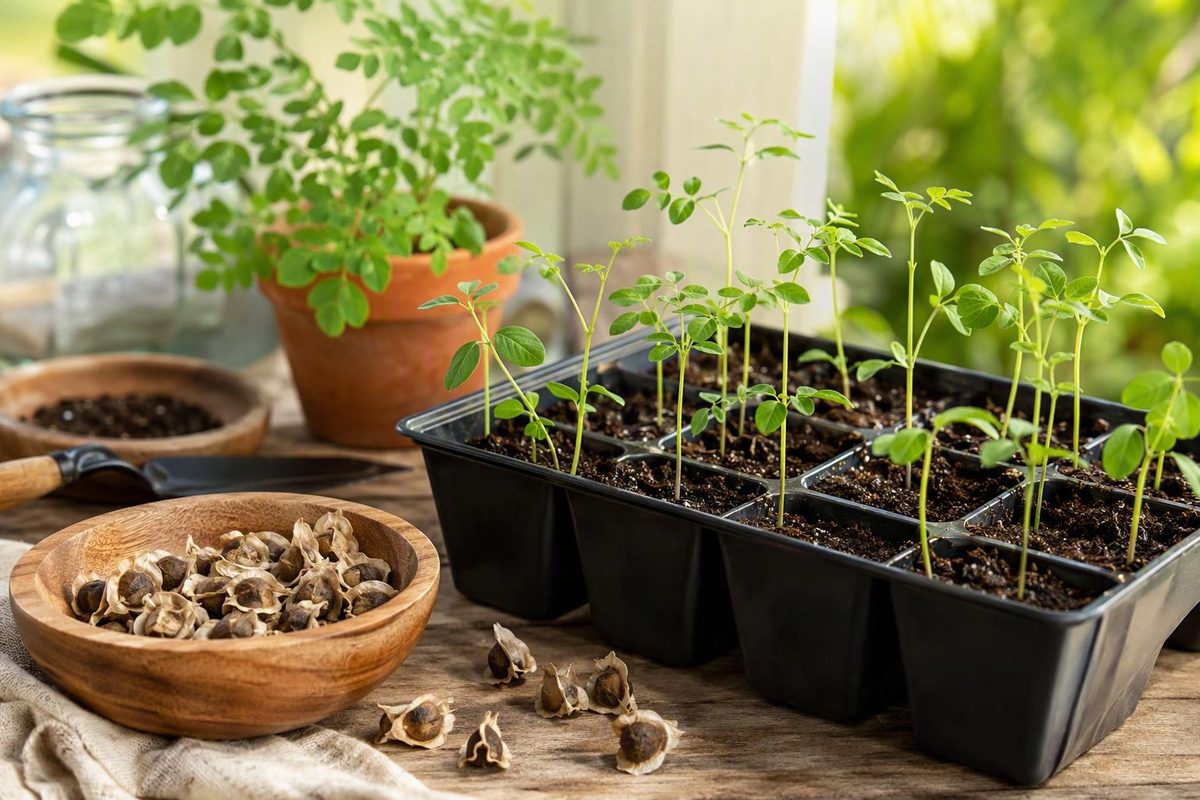
Sow Moringa oleifera seeds about 1 inch deep in a free-draining seed-starting mix. Keep them warm and lightly moist—not saturated—and expect uneven emergence over roughly 7 to 30 days. No presoak or scarification is required.
Moringa is a tropical tree, not a cold-hardy garden perennial. Unless outdoor conditions are already reliably warm, starting in individual pots indoors gives each seed a controlled germination site and lets you move the seedlings outside later.
Before sowing: check the seed and your climate plan
Use seed sold as Moringa oleifera. Kew accepts this species and gives its native range as northeastern Pakistan to northwestern India (Kew Science).
Freshness matters. Published work reports 60%–90% germination for fresh seed but notes that moringa seed can lose viability quickly (Plants). If the packet has no harvest or packing date, sow several seeds rather than building the plan around one.
Decide where the resulting plant will live before starting:
- Frost-free climate: transplant into a sunny, well-drained site after the seedling is established.
- Climate with frost: treat moringa as a warm-season plant or keep it in a movable container. The species is highly susceptible to frost and cold conditions (Agriculture).
Sow each seed in its own pot
- Fill a clean pot with damp seed-starting mix. A pot with drainage holes is essential. The mix should feel evenly damp but should not release water when squeezed.
- Sow the intact seed 2.5–3 cm deep—approximately 1 inch. This depth follows Tamil Nadu Agricultural University’s directions for annual moringa (TNAU Agritech Portal).
- Cover gently and label the pot. Include the sowing date so you do not mistake slow emergence for failure.
- Keep the root zone warm. A reviewed body of research found a 30°C day/20°C night cycle—86°F/68°F—most favorable for germination, growth and development (Agriculture). Avoid a cold windowsill, especially overnight.
- Maintain light moisture. Check below the surface before watering. Moringa favors sandy, well-drained loam and is susceptible to waterlogged conditions, so a constantly sodden pot works against the seed rather than helping it (Agriculture).
Presoaking is optional, not a prerequisite. World Agroforestry’s propagation record says pre-sowing treatment is unnecessary and describes germination as fast—less than two weeks under its stated conditions (World Agroforestry). Starting dry seed also avoids the risk of leaving it submerged too long.
What emergence looks like
Do not dig up the seed after a few quiet days. Moringa germination is hypogeal: the cotyledons remain below the soil, and the first visible shoot carries true leaves. In one potting-substrate study, the first seedling emerged around day 7, the average emergence time was 14.6 days, and additional seedlings continued appearing through day 32 (Plants).
A useful home-garden checkpoint is therefore:
- Days 1–7: maintain warmth and moisture; no visible change is normal.
- Days 7–14: begin watching for a shoot, but do not assume every viable seed will appear now.
- Days 15–30: continue the same conditions if the mix smells fresh and is not waterlogged.
- After about 30 days: inspect one failed pot. A soft, dark or foul-smelling seed has rotted; a firm seed may have been too cool, too dry or low in viability.
Care after the shoot appears
Move the pot immediately into strong light. Indoors, place it under a grow light rather than relying on a dim or cold window; the setup in our indoor seed-starting guide can be used for moringa seedlings too.
Let the top of the mix begin to dry between waterings, then water thoroughly and allow the excess to drain. A pale, stretched stem points to insufficient light. A seedling that collapses while the mix remains wet points instead to excess moisture or a seedling-disease problem.
Wait until the roots hold the mix together before shifting the plant into a larger container. If it will grow outdoors, acclimate it gradually to direct sun and wind, and do not plant it out while cold nights or frost remain possible. The key distinction is simple: warm, evenly moist conditions start the seed; stronger light, drainage and protection from cold keep the seedling growing.