
Mini Cucumber Varieties: Choose for Pots, Trellises or Pickles
Compare mini cucumber varieties for containers, trellises and pickling. Learn which seed-packet labels matter and when seedless fruit needs isolation.
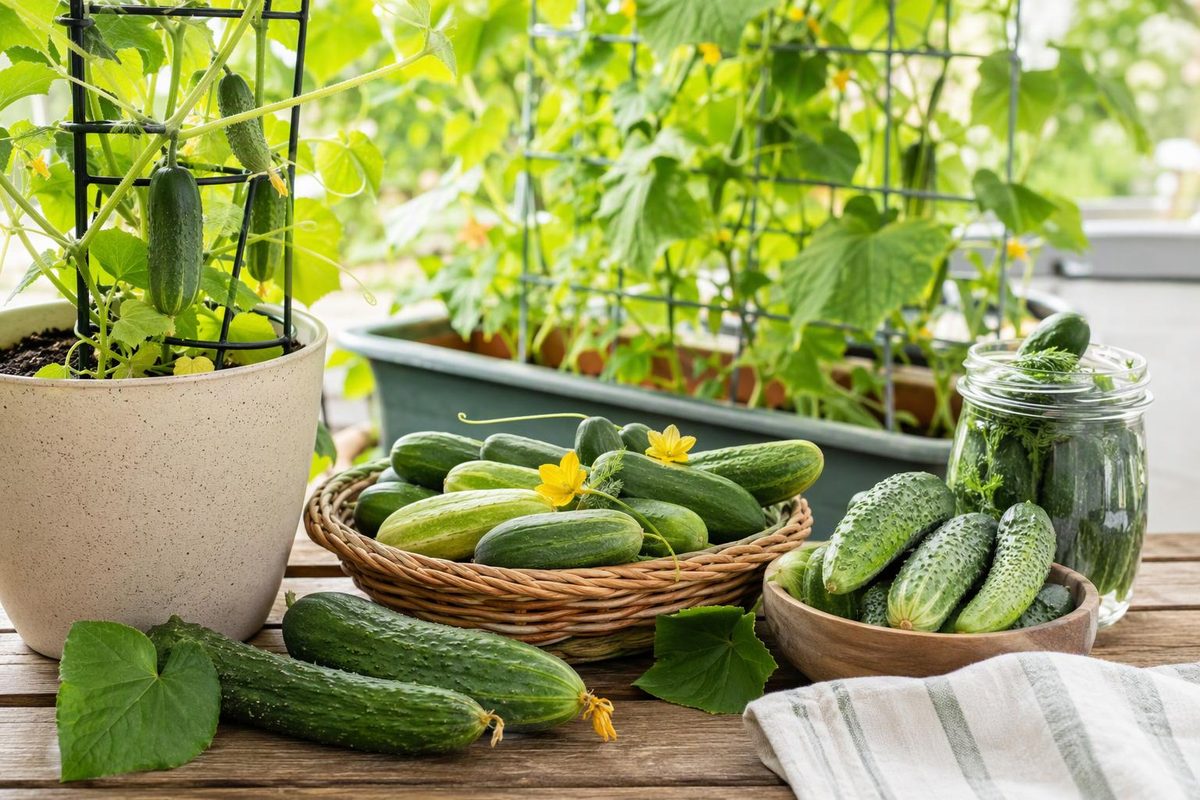
For a container, shortlist Quick Snack or Iznik; for a tall outdoor trellis, consider Green Light. If you want tiny pickling cucumbers rather than smooth snack cucumbers, look at Adam Gherkin.
The important distinction is fruit size versus plant size. A mini cucumber can grow on a substantial vine: All-America Selections lists Green Light at 80 inches tall, despite recommending harvest at just 3–4 inches long. “Mini” alone is not enough information to plan your garden space. Green Light variety record
Compare the varieties before buying seed
These choices draw on seed-catalog descriptions and an All-America Selections variety record, not our own trials. Harvest lengths below are the named sources’ picking sizes—not a promise that fruit stops growing there.
| Variety | Harvest length | Why put it on your shortlist? |
|---|---|---|
| Quick Snack F1 | 2–4 inches | A cocktail cucumber with an exceptionally compact vine. Johnny’s recommends it for containers and notes that even these tidy plants benefit from support such as a tomato cage. Variety details |
| Iznik hybrid | 3–4 inches | Smooth, thin-skinned fruit on short vines with small leaves. Jung lists it for containers, trellises, greenhouses and regular gardens, with fruit suitable for fresh use or pickles. Variety details |
| Green Light F1 | 3–4 inches | Spineless snack cucumbers for a vertical garden. AAS recommends stakes or poles; its listed 80-inch plant height makes this a trellis choice, not a miniature bush. Variety details |
| Katrina F1 | 5½–6½ inches | A larger, thin-skinned snacking cucumber. Johnny’s describes it for protected culture and highlights fruit set under heat stress. Consider it for a greenhouse or tunnel rather than assuming every snack cucumber suits a small patio pot. Variety details |
| Adam Gherkin F1 | 2–3 inches | A European-style pickler with tiny spines, suitable for field or greenhouse growing. Johnny’s lists it as both gynoecious and parthenocarpic. Variety details · Harvest-size chart |
For a small-space shopping list, use compact or short-vined habit as your first filter, then choose the fruit size you want. For a bed with vertical support, vine height may matter less than harvest size and intended use.
“Seedless” and “all-female” mean different things
Two packet terms change how you plan for flowers and pollination:
- Gynoecious means predominantly female flowers. It does not, by itself, mean the plant can set fruit without pollen.
- Parthenocarpic means fruit can develop without pollination. You do not need to add a pollen-donor cucumber for that purpose.
Michigan State University Extension makes this distinction in its guidance on seedless pickling cucumbers. It also explains that pollen from a standard cucumber can cause a parthenocarpic variety to develop seeded fruit. MSU pollination guidance
All five varieties above are listed as parthenocarpic by their sources. That makes them useful where bee access is limited, but seedless is conditional, not guaranteed in a mixed cucumber planting. Johnny’s recommends separate, insect-screened greenhouse or tunnel growing when preventing pollination is important. Simply putting two varieties at opposite ends of a small bed is not dependable pollen exclusion. Johnny’s seedless-fruit guidance
Check the maturity clock, then plan the planting
Before comparing “days to harvest,” check where counting begins. AAS gives Green Light 37–42 days from sowing and 30–37 days from transplanting. Johnny’s states that its Quick Snack and Katrina maturity figures count from transplanting. Those clocks are not interchangeable, and the figures are estimates rather than fixed harvest dates. AAS timing · Quick Snack timing definition · Katrina timing definition
Choose the variety and reserve its support space first. Then use our cucumber-from-seed guide for warm-soil checks, sowing and transplant timing. Keep the variety’s harvest-length target with your garden notes so you know what “ready to pick” means for the seed you actually bought.