
Heat-Tolerant Tomato Varieties for Hot Summers
Compare heat-setting tomatoes for humid and dry climates, then time planting and care to improve fruit set during hot weather.
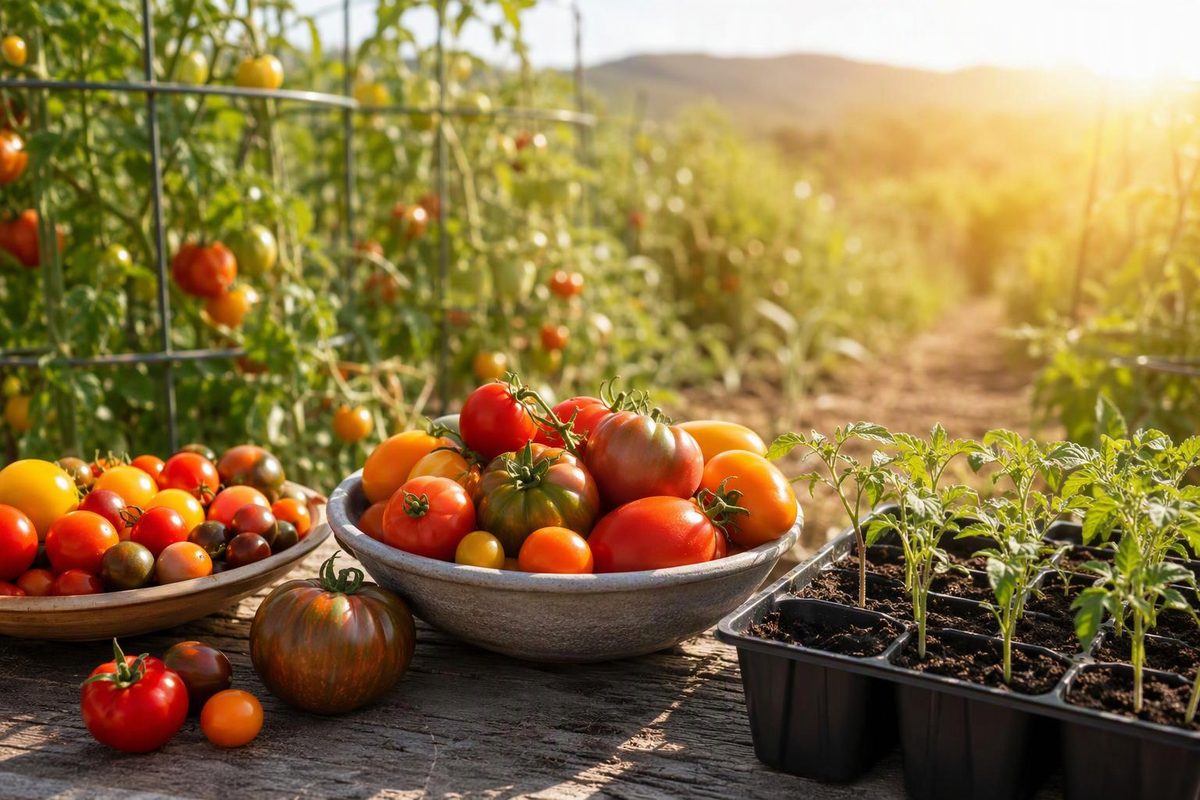
For large red tomatoes in hot, humid summers, start your shortlist with Florida 91, Heatmaster, Solar Fire, Heat Wave II, Phoenix or Bella Rosa. For small fruit, consider BHN 784 or another cherry or grape tomato. If you want an open-pollinated cultivar for seed saving, look at Creole, Arkansas Traveler or Porter.
“Heat tolerant” usually means a cultivar has been selected for better fruit set at high temperatures—not that it is unaffected by heat. Tomato pollination and fruit formation can be disrupted when days exceed about 90°F and nights exceed about 70°F, though the threshold varies with the cultivar and conditions. Flowers may open and then drop without forming fruit (University of Maryland Extension).
Varieties worth shortlisting
| Variety | Fruit and habit | Best reason to try it |
|---|---|---|
| Florida 91 F1 | Large red slicer; determinate | UF/IFAS reports good fruit-setting ability under high temperatures. It also carries resistance to several diseases important in warm, humid regions (UF/IFAS). |
| Heatmaster F1 | Large red slicer; determinate | The breeder describes it as capable of producing quality fruit in hot, humid weather and lists about 75 days to relative maturity. Performance can vary by location and year (Seminis). |
| Solar Fire F1 | Medium-to-large red slicer; determinate | Developed by University of Florida researchers for warm-temperature fruit set. The release describes fruit just over 6 ounces and resistance to Fusarium wilt races 1–3, Verticillium wilt race 1 and gray leaf spot (UF/IFAS). |
| Heat Wave II F1 | Red slicer; determinate | UF/IFAS recommends it for Florida’s hotter months. It is a practical candidate where the spring fruit-setting window closes quickly (UF/IFAS Gardening Solutions). |
| Phoenix F1 | Red slicer; determinate | One option for a heat-tolerant trial. In a small Maryland comparison, it produced from late July into early October but received weaker flavor scores than Florida 91 and Heatmaster (University of Maryland Extension). |
| Bella Rosa F1 | Large red slicer; determinate | Oklahoma State identifies it as a heat-setting cultivar and recommends trying unfamiliar varieties on a limited basis first (Oklahoma State University Extension). |
| Creole | Medium red slicer; open-pollinated | A strong candidate for Louisiana and similar long, humid seasons. In an LSU AgCenter 2024 seed-increase planting, it produced through summer and again after late-summer pruning; LSU rated it highly heat tolerant under those conditions (LSU AgCenter). |
| BHN 784 F1 | Red grape; determinate | A small-fruited cultivar that UF/IFAS explicitly lists as heat tolerant (UF/IFAS). |
| Picus F1 | Roma; determinate | A paste tomato that UF/IFAS says sets well at high temperatures and has resistance to several diseases (UF/IFAS). |
Other extension-listed choices include Sun Leaper, Solar Set, Summer Set, Homestead, Arkansas Traveler and Porter (University of Maryland Extension). Availability changes, so it is more useful to identify two or three candidates suited to your fruit preference and climate than to search for one supposedly universal winner.
Match the tomato to your kind of summer
Humid Southeast and Gulf Coast
Look for heat set and resistance to diseases common in your area. Packet codes are specific: F indicates resistance to Fusarium wilt, V to Verticillium wilt and N to root-knot nematodes, but the packet should also identify the races covered. Florida 91, Heatmaster and Solar Fire combine heat-setting claims with resistance packages; compare those packages with advice from your local Extension office.
Low desert
Speed may matter as much as heat tolerance. Arizona Extension recommends early cultivars maturing in about 45–70 days because the low desert has two short tomato seasons around the hottest part of summer. It notes that quickly maturing cherry and plum tomatoes can be especially productive, while large, long-season cultivars often struggle at lower elevations (University of Arizona Cooperative Extension). A fast cherry planted early may therefore yield more than a slower heat-tolerant slicer.
Containers
Determinate plants are generally more compact, but the word does not mean “dwarf.” Give a slicer a sturdy cage and a container large enough that the mix does not dry rapidly. A movable container can help in climates where temporary afternoon shade is useful.
Seed saving
Creole, Homestead, Arkansas Traveler, Porter and Roma appear on Maryland Extension’s open-pollinated heat-tolerant list. Open-pollinated seed can reproduce the cultivar’s traits, but tomatoes can occasionally cross; isolate varieties or otherwise control pollination if maintaining true-to-type seed matters. F1 seed will not reliably reproduce the same combination of traits in the next generation.
Time flowering for the cooler window
Variety choice cannot fully compensate for poor timing. Use local frost dates and temperature records rather than a zone number alone:
- Check whether the packet’s maturity figure is counted from transplanting; many tomato listings use that starting point.
- Allow about six to eight weeks to start tomato seeds indoors, then harden them off.
- Transplant after frost danger, early enough for the first major flower clusters to open before persistent hot nights.
- Where the warm season is long, consider a second planting for fall rather than expecting uninterrupted fruit set through peak summer.
Oklahoma State recommends placing heat-sensitive cultivars in the earliest planting and using heat-tolerant or small-fruited tomatoes in later successions (Oklahoma State University Extension).
Keep heat tolerance from being overwhelmed
Check moisture several inches into the root zone rather than watering only because leaves curl at midday. Water deeply when that zone is becoming dry, and mulch to slow moisture loss and moderate soil temperature.
Where intense sun adds to heat stress, Maryland Extension suggests late-afternoon shade or 30% shade cloth. Arizona’s low-desert guidance calls for 40–60% shade cloth, retaining foliage and avoiding pruning that exposes fruit to sunburn (Maryland Extension, University of Arizona Cooperative Extension). Keep shade cloth above the foliage with open sides so hot air can escape.
After a heat wave, watch the newest clusters. Pea-size fruit remaining attached after the petals fade is a better sign of recovery than flowers alone. Hand pollination cannot restore pollen made nonviable by heat, and extra fertilizer is not a cure for heat-related blossom drop. Keep moisture reasonably steady and use the next flower cluster as the checkpoint.