
When to Plant Lavender Seeds: Work Back From Last Frost
Plan lavender seed sowing around your last frost date, allow extra time for chilling, and use seedling growth and weather to decide when to plant out.
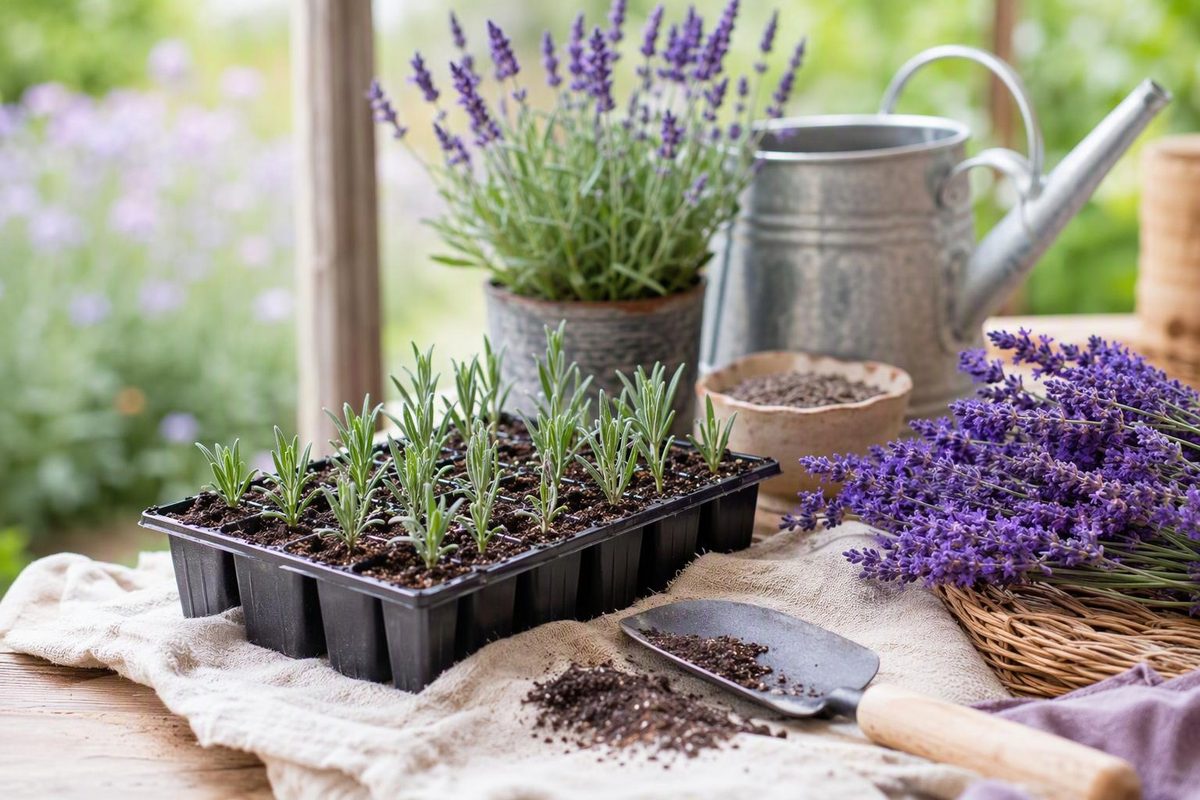
For English lavender (Lavandula angustifolia), plan to sow indoors about 10–12 weeks before your average last spring frost, then transplant after frost risk has passed. If your packet recommends cold-moist treatment, allow extra time before the indoor growing window.
The lead time depends on the seed you buy. Botanical Interests recommends 10–12 weeks, while Johnny’s Selected Seeds recommends 8–10 weeks for English lavender. Use your packet’s directions first; without a more specific schedule, the earlier window gives you some breathing room. If your packet names another lavender species, use its schedule rather than assuming these timings apply.
Calculate your sowing date
Start with your local average last-frost date, rather than a universal planting month. For example, a mid-May last frost points to late February or early March for a 10–12-week indoor start. A later spring shifts that window later; an earlier spring shifts it earlier.
Put three separate tasks on your calendar:
| Task | When to schedule it |
|---|---|
| Cold-moist treatment, if recommended | Allow the packet’s treatment duration before the planned warm-growing period |
| Indoor sowing and germination | Usually 10–12 weeks before average last frost, unless the packet specifies otherwise |
| Hardening off and transplanting | Gradually acclimate seedlings before planting out; use the forecast as well as the frost date |
If you are planning a spring transplant in a frost-free climate, count backward from that intended planting period instead. Choose a time when the outdoor bed is warming and free-draining. The Royal Horticultural Society recommends spring planting and warns against putting young lavender into cold, wet winter soil. Its April–May planting advice is UK guidance, not a worldwide seed-sowing calendar.
Allow extra time if the seeds need chilling
Cold stratification means holding seeds moist and cold, rather than simply storing a dry packet in the refrigerator. Botanical Interests recommends a 3–6-week refrigerated treatment to aid lavender germination. To leave room for that treatment and subsequent seedling growth, count those weeks backward from your planned warm-growing start. Its sowing guide explains the treatment.
Do not assume every lavender packet needs the same treatment. Johnny’s English-lavender instructions give an indoor sowing method without a chilling step. Follow the directions for your seed variety, especially when the supplier gives a specific germination procedure.
For the actual sowing method, see our lavender germination guide, which covers light, moisture and chilling.
Can you sow lavender seeds outdoors?
Indoor starting is the more controlled route. Johnny’s recommends transplants and does not recommend direct seeding. Botanical Interests does offer outdoor windows: 4–6 weeks before average last frost, once soil can be worked, or late fall, when outdoor conditions can provide natural chilling. These are supplier-specific alternatives, not a reason to scatter seeds into a waterlogged winter bed.
If you want plants ready for a particular spring planting date, choose indoor starting. Outdoor sowing leaves the emergence schedule more dependent on local weather.
Let seedlings and weather decide the transplant date
A sowing date is a plan, not a deadline for sprouts. Johnny’s lists 14–21 days at 65–70°F (18–21°C) for English lavender germination; Botanical Interests warns that lavender seeds can take 60 days. A quiet tray at three weeks is therefore not automatically a failed tray.
Once seedlings are large enough to handle, move crowded plants into individual pots. Keep growing them if they are still too small when your planned planting date arrives.
Before transplanting, gradually introduce outdoor sun and wind. University of Minnesota Extension recommends a two-week hardening-off period: begin with a few afternoon hours in shade, protected from wind, bring plants inside before nighttime temperatures drop, and increase exposure each day. Delay planting if freezing weather is forecast.
Choose a sunny, fast-draining position and water after planting. Established lavender tolerates drought, but newly planted lavender still needs regular watering during its first summer, especially in dry weather.