
How to Germinate Peach Seeds With Cold Stratification
Learn when and how to cold-stratify a peach pit, recognize a split shell or root, sow it safely, and use outdoor winter chilling where suitable.
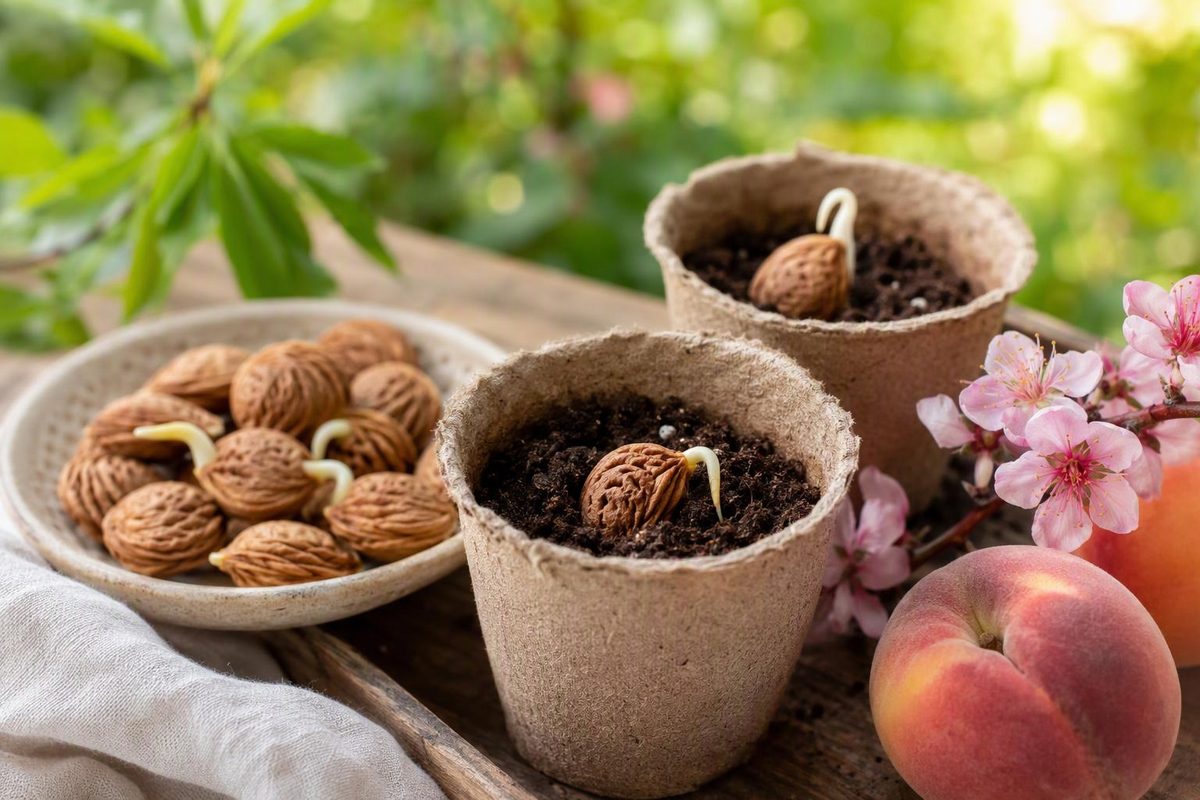
To germinate a peach seed (Prunus persica), chill a cleaned pit in barely moist medium for 100–130 days at about 38–41°F (3–5°C), then sow it when the shell splits or a white root appears. Begin checking around day 90. Oklahoma State reports after-ripening in approximately 100 days at 32–45°F, while Penn State lists 120–130 days with 45°F as the best temperature; the difference reflects variation among seed lots and conditions (Oklahoma State University Extension; Penn State Extension).
Enter the day refrigeration begins to see the checking and sowing dates.
Peach Pit Chilling Schedule
Choose a start date. Begin weekly checks on day 90, expect the main chilling window from day 100 through day 130, and sow sooner if a white root appears.
| Checkpoint | Timing | Action |
|---|---|---|
| Start | Day 0 | Refrigerate near 40°F in barely moist medium. |
| Check weekly | From day 90 | Look for a split shell or white root. |
| Main window | Days 100–130 | Sow when a root appears; otherwise complete the chill. |
A root overrides the calendar: sow promptly before it becomes long and fragile.
Source ranges: Oklahoma State University Extension, Penn State Extension and the USDA woody-plant seed manual.
A Seed-Grown Peach Will Be Unique
A seed-grown peach is not a copy of the tree that produced the fruit. The seed carries genes from both its pollen and seed parents, so the new tree’s fruit and growth may not match the peach you ate. Named cultivars are reproduced by budding or grafting when an exact match is required (Penn State Extension).
Treat a pit-grown tree as an experiment or potential rootstock. Start several pits if possible because viability varies. Use pits from fully ripe, sound fruit; the USDA woody-plant seed manual notes that collecting mature Prunus fruit improves the likelihood of good germination (USDA Forest Service).
Refrigerator Stratification Takes Four Steps
1. Clean the Pit Without Damaging the Kernel
Remove all fruit flesh, rinse the hard pit and let its surface dry. The actual seed is the kernel enclosed by that shell.
You do not have to crack the pit. Removing the shell can hasten or increase peach germination, but properly stratified Prunus seed does not require another pretreatment. Leaving the shell intact avoids crushing or cutting the kernel.
Do not taste or eat the kernel. It contains amygdalin, which can release cyanide when digested (Poison Control).
2. Pack the Pit in Barely Moist Medium
Moisten vermiculite, peat moss or a folded paper towel, then squeeze out any free water. The material should feel damp but should not drip. Place the pit and medium in a labeled zip-top bag or lidded container without packing them tightly.
Oklahoma State favors vermiculite because it holds moisture while allowing air around the seed. Check the container periodically to confirm that the medium remains damp and free of extensive mold.
3. Refrigerate for 100–130 Days
Keep the container near 40°F without freezing it. Store it away from ripening apples, bananas, peaches and other ethylene-producing fruit; Penn State specifically cautions against exposing stratifying seed to such fruit.
Start checking weekly around day 90. A healthy pit may split along its seam, followed by the appearance of a white root tip. Sow promptly once a root appears because a long root breaks easily. The USDA manual identifies a split shell or emerging root as evidence of incipient germination and recommends checking near the end of stratification.
An intact pit at day 130 is not proof that it is dead. If it remains firm and free of decay, continue chilling for another week or two while keeping the medium barely moist.
4. Sow Before the Root Grows Long
Fill a deep pot with fresh, free-draining potting mix. Set an intact or newly split pit on its side and cover it to a depth of roughly one to two times the pit’s longest dimension. If a root has emerged, point it downward and handle the seed by the shell rather than the root.
Water until the mix is evenly moist and let the excess drain. Keep the pot around 64–72°F (18–22°C); the USDA manual cites 18–22°C as the germination-test temperature for peach. Do not keep the mix waterlogged.
Once a shoot emerges, provide strong light immediately. If it becomes pale, stretched or tilted toward a window, increase the light. The setup in our indoor seed-starting guide also works for a young peach seedling.
Fall Sowing Can Supply the Cold Period Outdoors
Where winter reliably provides several months of cold, the weather can stratify the pit:
- Clean the pit after harvest.
- Plant it in a nursery bed or deep pot in fall, before the ground freezes.
- Cover it no deeper than one to two times its longest dimension.
- Keep the soil from drying completely.
- Fasten hardware cloth over the site to exclude squirrels and other rodents, removing it when shoots emerge.
Penn State describes this protected outdoor method, and Oklahoma State notes that nurseries commonly fall-sow peach pits for rootstock production. In a mild-winter climate, refrigerator stratification is more dependable because outdoor conditions may not provide a long enough cold period.
The Pit’s Condition Determines the Next Step
- Extensive mold: Replace the medium and use less water. Make sure no fruit flesh remains on the pit.
- A split shell: Germination has begun. Continue checking for a root.
- A white root in the refrigerator: Sow promptly before it elongates.
- No immediate shoot after sowing: Keep the mix moderately warm and moist. Avoid repeatedly digging up the pit, which can damage a developing root.
- A tall, pale seedling: Provide stronger light while keeping lamps from touching or heating the leaves.
After the last severe frost, acclimate the seedling gradually to outdoor sun and wind. If it will remain as a tree, choose well-drained soil and full sun. Fruit trees need at least six hours of direct sun, with eight to ten hours preferable for fruit production (University of Georgia Extension).
Germination confirms that the seed was viable. It does not guarantee a tree suited to the local climate or fruit worth harvesting.