
How to Germinate Milkweed Seeds: Chilling, Sowing and Sprouts
Check your milkweed species, cold-moist stratify where needed, then sow in warm mix. Learn what to watch for and when slow seeds need more time.
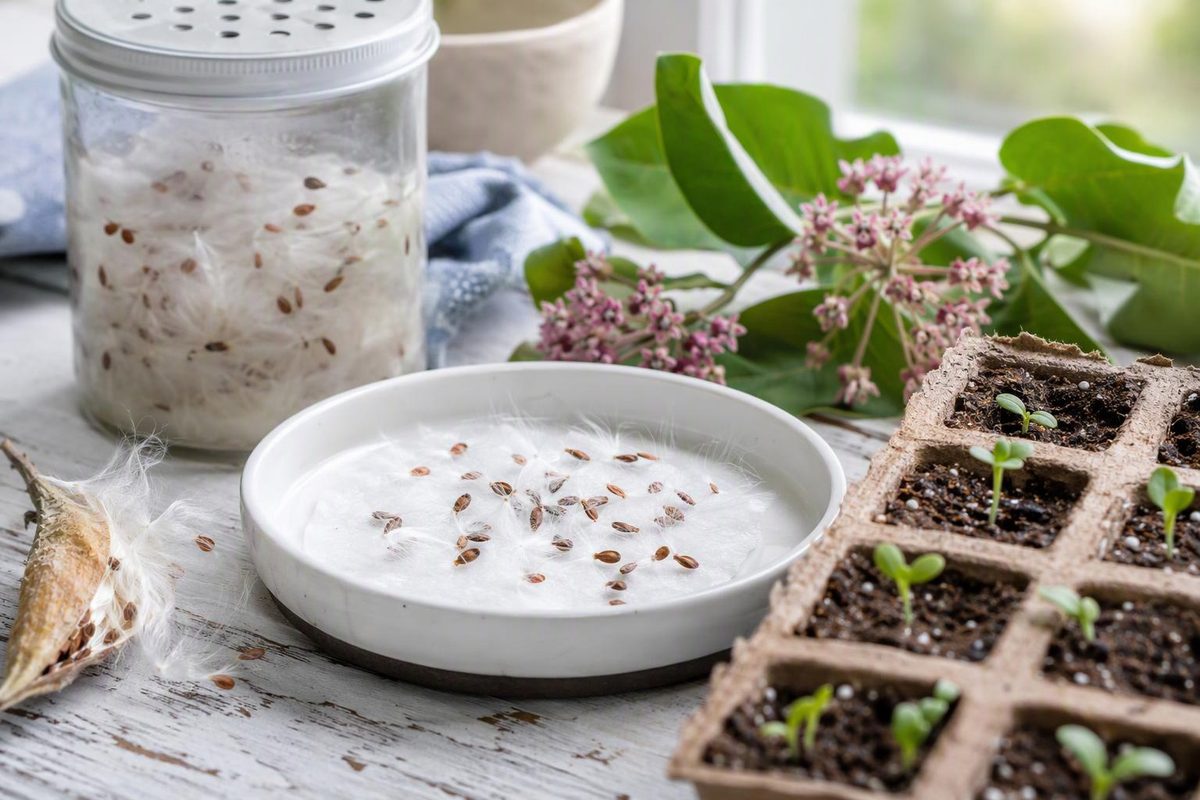
For many temperate milkweeds, a useful starting method is moist chilling followed by shallow sowing in warm, evenly damp mix. Chilling helps overcome seed dormancy; warmth then encourages germination. Simply storing a dry seed packet in the refrigerator is not the same treatment.
Check the species before chilling
Look for the botanical name and pretreatment instructions on your packet. Milkweed species—and seed lots—do not all respond alike.
- Butterfly weed (Asclepias tuberosa) and swamp milkweed (A. incarnata): Oklahoma State University Extension lists both among species that do well with 30 days of cold-moist stratification.
- Common milkweed (A. syriaca) and other temperate species: follow the supplier’s instructions. Monarch Watch gives a general milkweed chilling range of 3–6 weeks; some native species need longer.
- Tropical milkweed (A. curassavica): does not require cold stratification. That exception is not a reason to substitute it for a locally appropriate native species.
These distinctions come from Oklahoma State’s native milkweed guide and Monarch Watch’s propagation guidance. For a U.S. garden, Xerces recommends locally native milkweed with regionally sourced seed.
1. Cold-moist stratify the seeds
You need a paper towel, a sealable plastic bag, a label and refrigerator space.
- Wet the towel, then squeeze out excess water. It should feel like a wrung-out sponge, with no dripping water.
- Spread the seeds across it and fold the towel over them.
- Seal it in the bag. Label the species, starting date and planned sowing date.
- Refrigerate for the packet’s recommended period. Where no directions are supplied, 30 days is a starting point for many native milkweeds, not a universal requirement; Oklahoma State notes that some need 60–90 days or longer.
The Oklahoma State method stresses damp rather than sodden conditions. Check periodically for drying or decay. Discard soft, mushy seeds, but do not assume a little mold on the towel means every seed has failed.
Also watch for a tiny white root: swamp milkweed and butterfly weed can germinate during refrigeration. Sow these promptly and handle the seed rather than the fragile root.
2. Sow shallowly and provide warmth
After chilling, transfer the seeds into containers rather than leaving them to grow long roots through the towel.
- Use clean pots or deep cells with drainage holes, filled with premoistened commercial seed-starting mix.
- Press seeds into contact with the mix and cover with about ¼ inch, unless the packet specifies otherwise.
- Place the containers in a location around 70–75°F. Check the temperature near the pots rather than relying on the room thermostat.
- Keep the seed zone evenly moist, not waterlogged. A clear cover can reduce drying; remove it as seedlings emerge.
The depth and temperature follow an Ask Extension response to an Iowa gardener. Deep containers help accommodate milkweed’s early investment in roots, according to Xerces.
3. Watch for emergence, then change the care
Do not count refrigerator time as the germination waiting period. After sowing and warming, Monarch Watch reports that most seeds germinate in 7–10 days at 75°F, while the Iowa Ask Extension response says germination should begin in 3–4 weeks at 70–75°F. These are general milkweed estimates, not species-specific guarantees; do not discard the tray after one quiet week. (Monarch Watch; Ask Extension)
Once shoots appear, remove the cover and provide strong light. Monarch Watch recommends bottom watering; let excess water drain afterward. Persistently wet mix increases damping-off risk.
If seedlings are crowded, move them into individual pots once they have true leaves. Before planting out, gradually expose them to outdoor light and wind. Transplant after frost danger has passed, avoiding hot, dry or windy weather, as Xerces advises. Use the indoor seed-starting guide for lighting and hardening-off details.
If nothing sprouts—or you prefer fall sowing
After four warm weeks without emergence, check moisture, temperature and the species instructions before resowing. Seeds may need more chilling: the Iowa Ask Extension response suggests another 4–6 weeks of refrigeration for an unsuccessful moist flat.
Where winters supply sustained cold, moist conditions, fall sowing can replace refrigerator treatment. Prepare a weed-free bed and follow the packet’s sowing depth. Expect emergence in spring, not autumn. In mild-winter climates, refrigerator treatment gives more control over chilling; Xerces’ planting guidance explains both approaches.