
Best Shade Grass Seed: Choose by Climate and Light
Choose shade grass seed by climate, soil moisture and daily light. Compare fine fescue, tall fescue and warm-season lawn options before sowing.
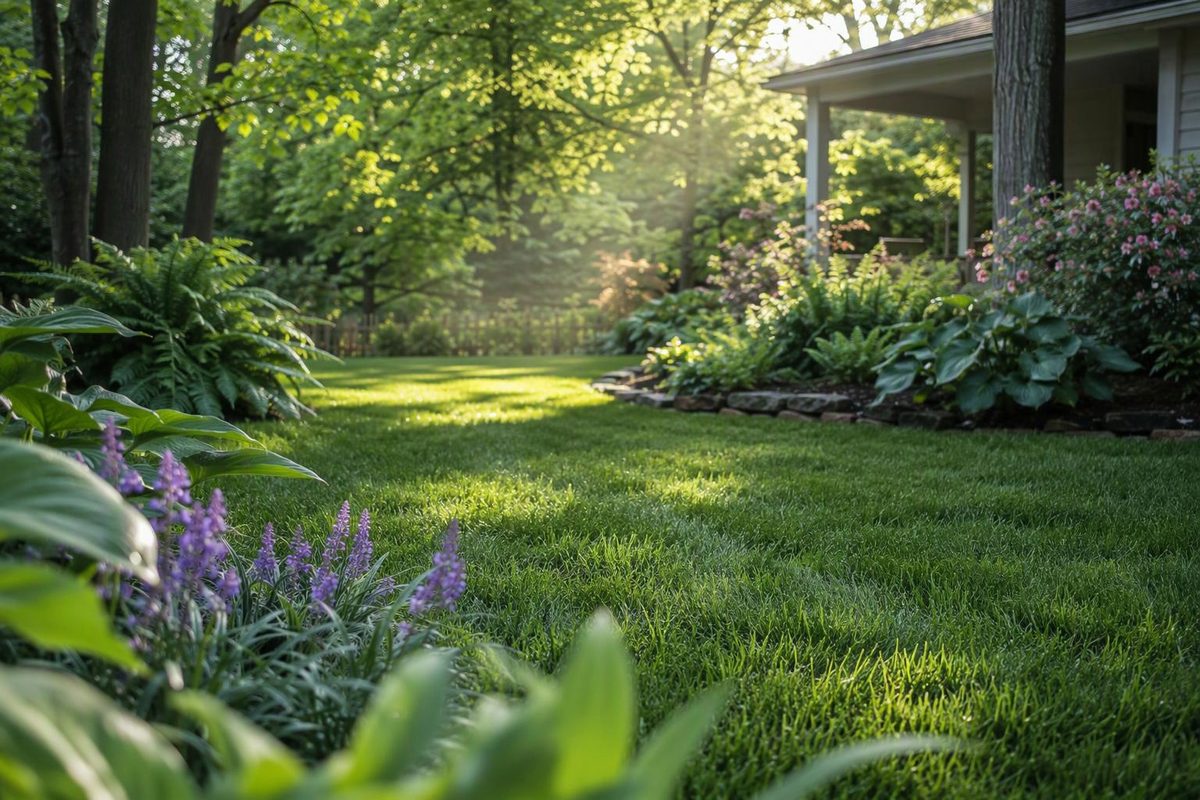
For a cool-season lawn, the best shade grass seed is often a fine fescue blend, particularly one containing Chewings fescue and creeping red fescue. For moderate shade, turf-type tall fescue can be the better choice where the lawn must also tolerate heat, drought or regular use.
In warm-season regions, the answer is less convenient: St. Augustinegrass is generally the most shade-tolerant warm-season turf, but it is normally installed as sod, plugs or sprigs—not seed. Zoysiagrass follows it in shade tolerance, though cultivar and climate matter. A bag marketed simply as “dense shade seed” is therefore not the right starting point for every yard.
Match the grass to the site
| Site conditions | Best starting choice | Important limitation |
|---|---|---|
| Cool-season region; dry to normally drained partial shade | Fine fescue blend | Poor tolerance of heavy traffic and constantly wet soil |
| Transition zone; dappled or moderate shade | Turf-type tall fescue blend, possibly with some fine fescue | Less shade-tolerant than fine fescue |
| Cool, persistently moist shade | Rough bluegrass in a specialized mix | Can decline if the site dries and spread into sunny turf |
| Warm-season region; partial shade | St. Augustinegrass sod or plugs | Usually not a seed option; limited cold tolerance |
| Warm-season region; lighter shade | Locally adapted zoysiagrass cultivar | Slow establishment; cultivar and planting form matter |
| Less than about four hours of sun, or very dense tree shade | Mulch or a locally suitable, shade-adapted groundcover | Even shade-tolerant grass is unlikely to remain dense |
Fine fescue is a group, not one grass. It includes Chewings, strong creeping red, slender creeping red, hard and sheep fescues. University of Minnesota Extension rates Chewings fescue’s shade tolerance as excellent, the creeping red fescues as good to excellent, hard fescue as good, and sheep fescue as fair to good. For a heavily tree-shaded Minnesota lawn, its example blend is 40% Chewings, 40% strong creeping red and 20% hard fescue by weight, though commercial mixtures will not always match those percentages exactly (University of Minnesota Extension).
That recipe should not be treated as a national formula. Fine fescues suit cooler regions and relatively dry shade. In the transition zone, turf-type tall fescue is often more resilient overall. It grows best in sun but tolerates dappled, moderate shade; fine fescue accepts more shade but has low tolerance for repeated foot traffic (University of Maryland Extension). A play area beneath trees may therefore do better with tall fescue than with the grass that has the highest shade rating on paper.
In southern climates, do not buy cool-season “shade seed” without checking regional recommendations. NC State identifies St. Augustinegrass as the most shade-tolerant warm-season grass, followed by zoysiagrass, while bermudagrass is the least shade-tolerant. Its guidance also notes that St. Augustinegrass is usually planted vegetatively (NC State Extension). For a southern yard that is too shady for a locally recommended seeded grass, St. Augustine sod or plugs may be more realistic than repeated reseeding.
Measure shade before buying seed
Judge the site after deciduous trees have fully leafed out. Note where direct sun falls at several points through the day rather than relying on labels such as “north side” or “under a tree.” If the ground receives less than about four hours of sunlight per day or less than half of open sunlight, NC State considers it too shady for turfgrass to grow well.
Also inspect what accompanies the shade:
- Dry soil and tree-root competition: Favor fine fescue in cool-season regions, then keep the seedbed consistently moist during establishment.
- Wet soil and poor air movement: Correct drainage first. Fine fescue does not tolerate constantly wet ground. Rough bluegrass is a specialized option for cool, moist shade, not a default ingredient.
- Foot traffic: Favor turf-type tall fescue where climate permits, or redirect the traffic. Shaded turf has lower wear tolerance than sunny turf.
- Dense leaf litter: Remove leaves frequently while seedlings establish so they continue receiving light, air and water.
Shade is only part of the problem beneath trees. Roots compete with grass for water and nutrients, while slow drying can increase disease pressure. Penn State recommends fine fescues for drier shade, rough bluegrass for constantly moist shaded sites and tall fescue for moderate shade (Penn State Extension).
Read the seed label, not the picture on the bag
Turn the package over and look for named species and cultivars. For dry partial shade in a cool-season lawn, a useful bag should list a substantial proportion of fine fescue—preferably more than one adapted type or cultivar. For moderate shade and a harder-used transition-zone lawn, look for a blend of several turf-type tall fescue cultivars rather than coarse forage-type Kentucky 31.
Check these label details:
- Species and cultivar names: “Shade mix” alone says little about what will persist.
- Germination percentage and test date: Freshness matters, especially for fine fescue. Maryland Extension advises that labeled germination should be at least 70% and notes that fine fescue seed loses viability relatively quickly.
- Weed seed and other crop seed: Choose figures as close to zero as possible.
- Annual ryegrass: Avoid it as a prominent filler. It establishes quickly but lives for only one year and can compete with the permanent turf.
- Regional trial performance: Cultivars that succeed in one climate may fail under another region’s heat, winter cold or disease pressure. Use the current cultivar list from your state Extension service when one is available.
Percentages on grass-seed labels are by weight, not by number of seeds. A small-seeded species may contribute more individual plants than its percentage suggests, so compare formulas rather than assuming the largest percentage always dominates the finished lawn.
Seed when the grass can establish
Cool-season grasses are generally easiest to establish from late summer into early fall, with the exact window shifting by latitude and first-frost timing. Warm-season grasses are planted in late spring or early summer after the soil has warmed. Follow the locally recommended window rather than a national calendar.
For an all-fine-fescue lawn, Minnesota Extension recommends roughly 3 to 6 pounds of seed per 1,000 square feet. Maryland’s guidance gives 4 to 6 pounds for fine fescue and 6 to 8 pounds for tall fescue. These are regional examples; the package rate and local Extension recommendation should settle the rate for the actual blend.
Prepare exposed soil, split the measured seed into two portions and spread the halves in perpendicular passes. Keep the seedbed evenly moist during germination without leaving it saturated. Fine fescue may emerge in roughly 7 to 14 days under favorable conditions, but cool soil, uneven moisture and poor seed-to-soil contact can extend that window.
Once established, mow shaded grass near the upper end of its recommended range. Leaving more leaf area helps grass capture the limited light. Avoid forcing weak shade growth with excess nitrogen, limit traffic, and irrigate deeply and infrequently after establishment rather than keeping the foliage continually wet. NC State notes that shaded grass is weaker than turf in full sun and recommends higher mowing, lighter fertilization, and deep, infrequent irrigation to improve persistence (NC State Extension).
If the new grass thins again despite suitable seed and careful establishment, treat that as information about the site. Selectively opening the canopy, redirecting foot traffic or replacing the darkest section with mulch will usually be more durable than sowing another bag labeled for shade.